
When All Twelve Stood
The courtroom carried the quiet weight of anticipation. Weeks of testimony had led to this moment. Evidence had been presented in careful sequence. Witnesses had spoken. Arguments had been examined from every angle. Now, the final step remained.
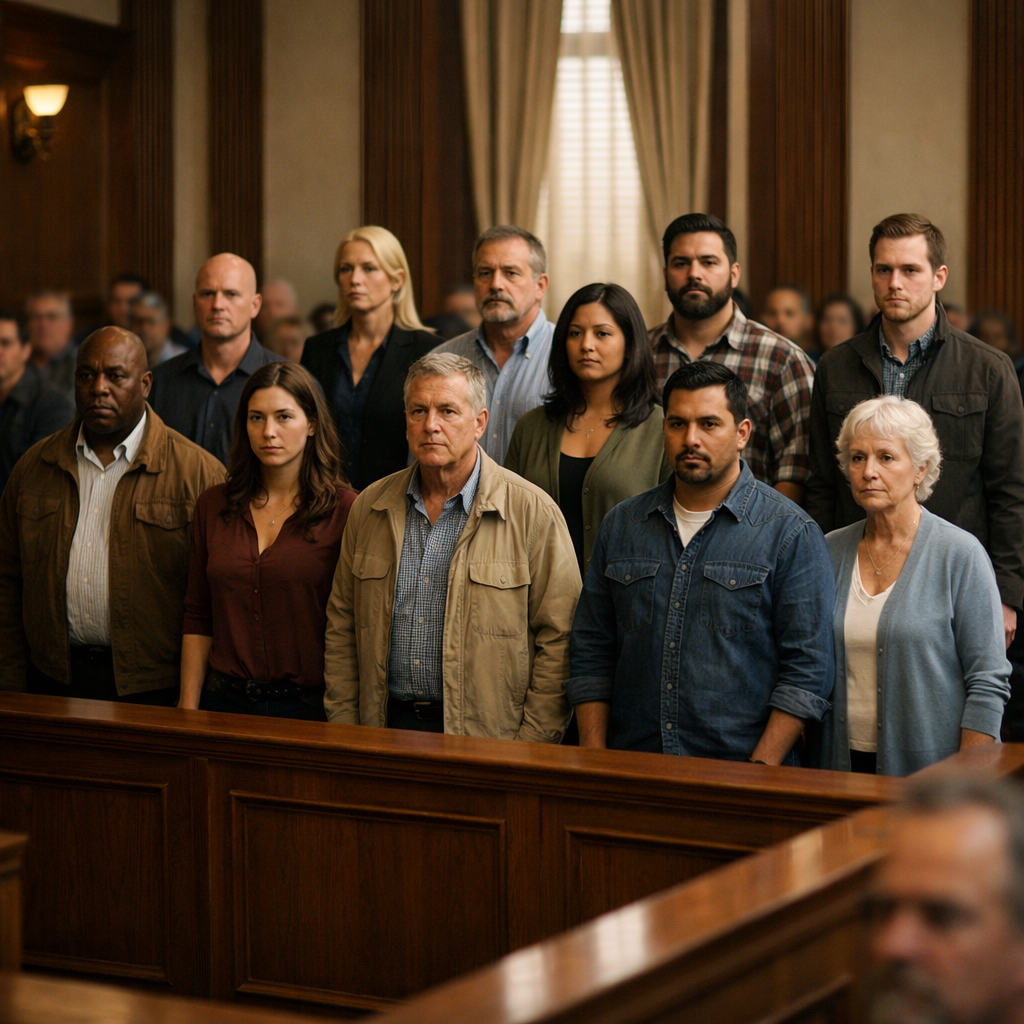
The jurors sat inside the wooden box to the left of the bench, their faces composed but serious. Spectators filled the gallery, leaning forward slightly in their seats. Attorneys stood ready at their respective tables. The defendant sat motionless, hands folded, waiting for a decision that would shape the course of his life.
At the front of the room, the judge prepared to speak.
“Has the jury reached a unanimous decision?”
His voice echoed gently across the courtroom, steady and clear.
Every eye turned toward the jury box.
An Unusual Response
In most trials, the foreperson stands alone to speak for the group. It is a moment guided by routine and structure. The process offers clarity and order.
But this time, something unexpected happened.
Instead of one person rising, all twelve jurors stood at the same time.
A subtle gasp moved through the gallery. Even the attorneys seemed momentarily unsure of what they were witnessing.
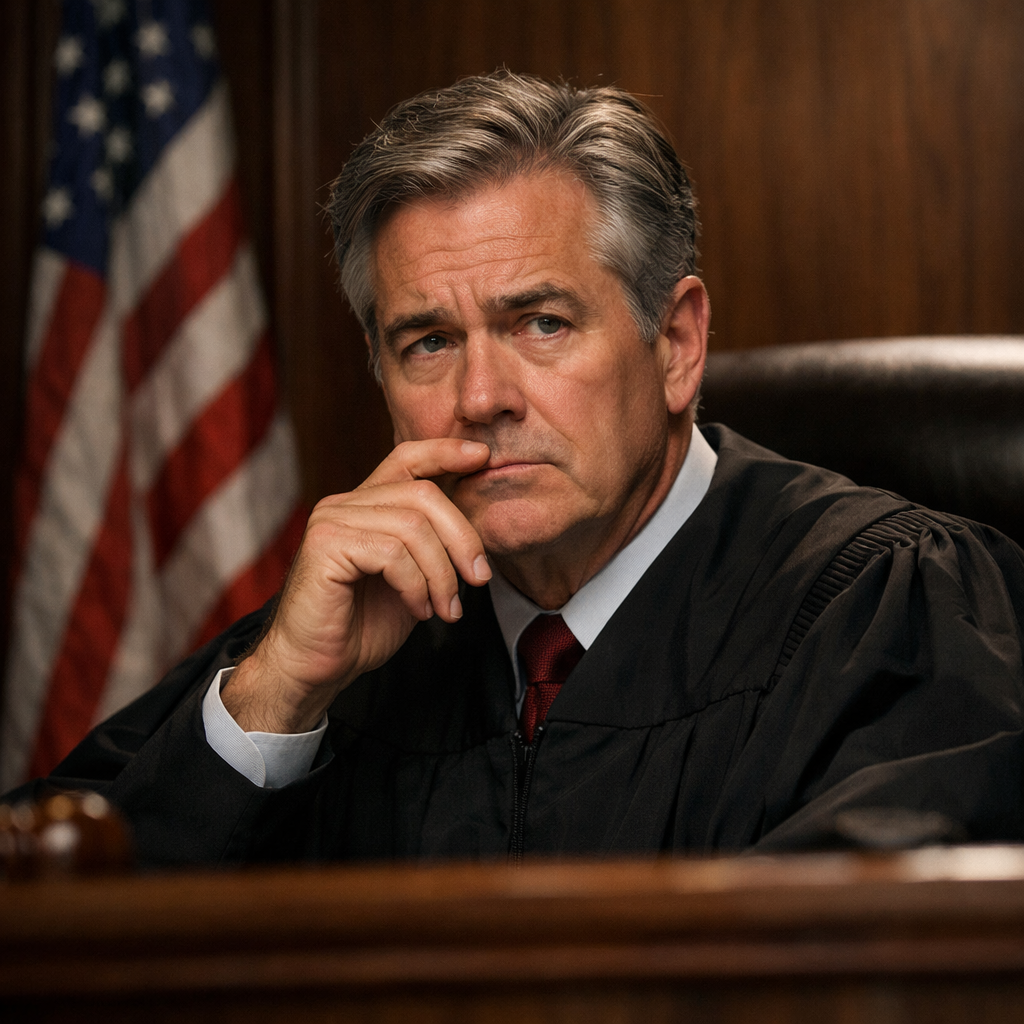
The judge’s expression shifted slightly. Not to alarm, but to curiosity. This was not how proceedings usually unfolded.
“Foreperson,” he said calmly, “you may address the court.”
The foreperson, a middle-aged professional with measured composure throughout the trial, did not immediately speak. Instead, he looked briefly at the other jurors, who remained standing beside him.
The unity of their posture carried meaning.
Finally, he shook his head gently.
“We cannot deliver a verdict at this time, Your Honor.”
The words landed softly, yet the impact was immediate.
When Procedure Pauses
Silence settled over the courtroom once again. The defendant blinked in confusion. The prosecution team exchanged careful glances. The defense attorney leaned slightly forward, unsure whether this development signaled concern or opportunity.
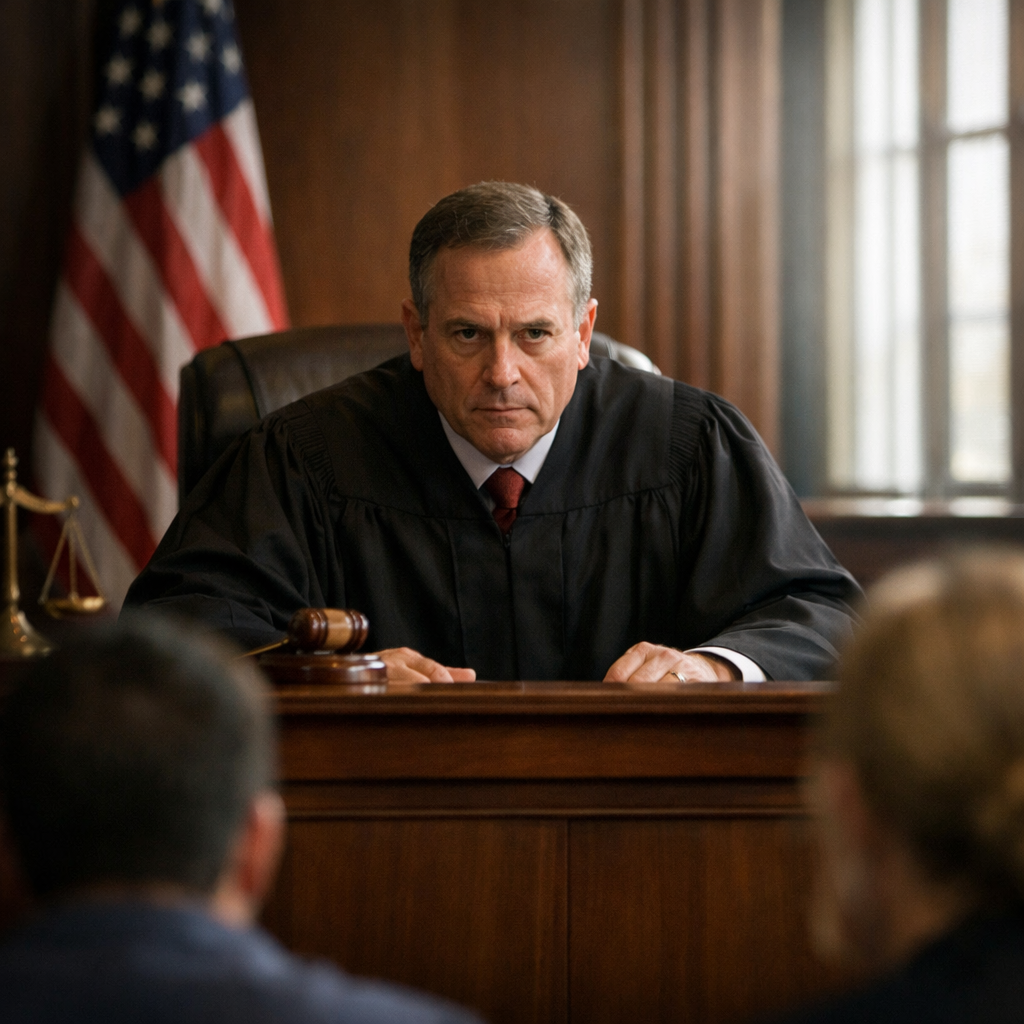
The judge maintained composure.
“Please explain,” he said evenly.
The foreperson took a steady breath.
“During our deliberations, inconsistencies in the presented evidence became clear. We believe certain materials may not reflect their original form.”
The courtroom absorbed the statement.
Trials rely heavily on trust. Trust in process. Trust in documentation. Trust in accuracy. When jurors express concern about evidence, it represents something serious.
The judge did not react impulsively. Years of experience had taught him that calm evaluation protects fairness.
“You are suggesting that the evidence was altered?” he asked carefully.
“Yes, Your Honor,” the foreperson replied. “We unanimously agree that further review is necessary before any verdict can be responsibly delivered.”
All twelve jurors remained standing, unified in their position.
The Strength of Collective Responsibility
The room felt different now. Not chaotic. Not dramatic. But reflective.
Jurors serve as representatives of the community. Their role is not only to decide outcomes, but to safeguard the integrity of the process itself. When twelve individuals independently reach the same concern, it demands attention.
The defendant remained silent, processing what had just occurred. Moments earlier, he had prepared to hear a final word. Now, uncertainty returned.
The prosecution team began reviewing notes, aware that clarity would be required. The defense attorney maintained thoughtful composure, recognizing that justice often requires patience.
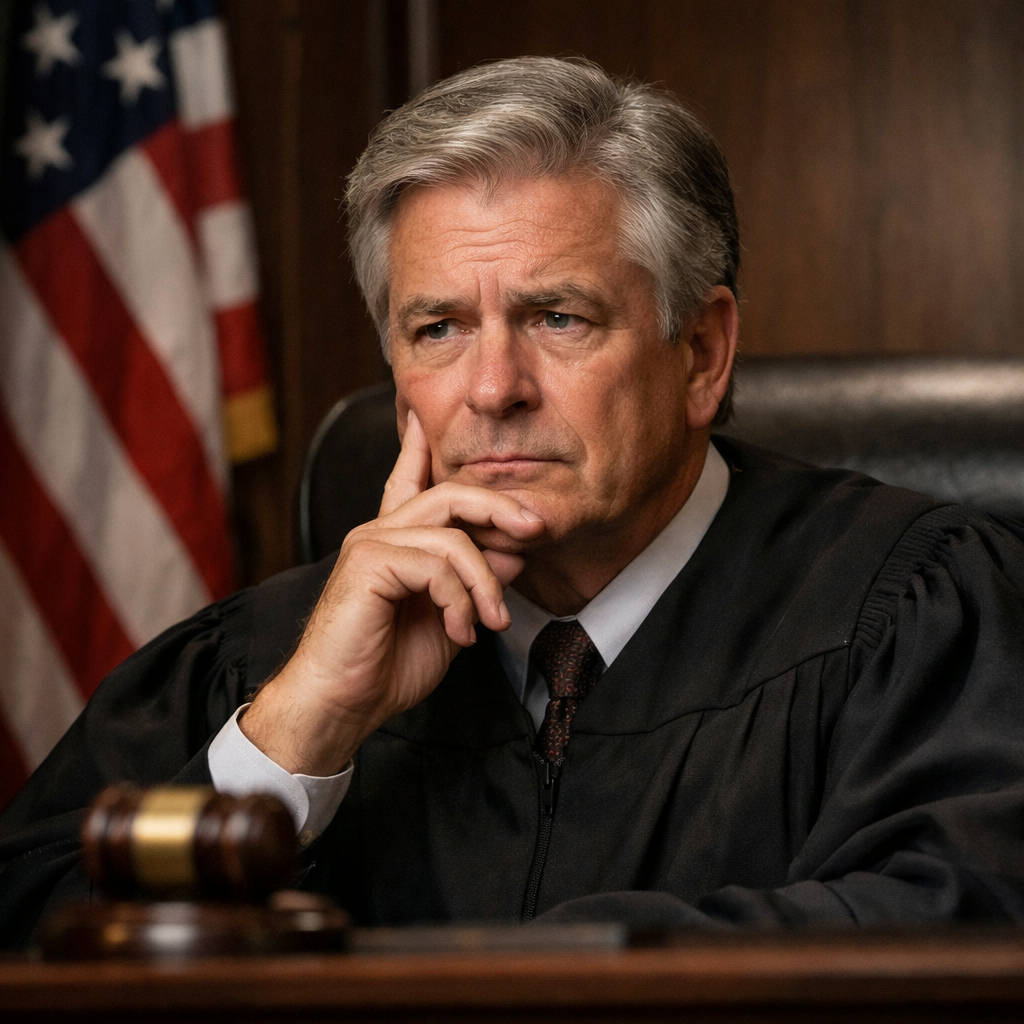
The judge folded his hands briefly before speaking again.
“This court takes concerns regarding evidence very seriously. If there is reason to question accuracy, it is our responsibility to examine it thoroughly.”
His tone carried reassurance.
Justice is not a race to conclusion. It is a commitment to truth.
A Commitment to Accuracy
The judge addressed the jury directly.
“Your role is to ensure that your verdict reflects careful consideration of all verified facts. If doubt exists regarding the authenticity of materials presented, the court must review those matters before proceeding.”
The foreperson nodded.
“That is our position, Your Honor. We cannot deliver a decision unless we are confident that the record is accurate.”
The unity of the jurors demonstrated something important. This was not disagreement among themselves. It was collective responsibility.
Spectators in the gallery observed quietly, recognizing they were witnessing a rare moment. Not conflict. Not disorder.
Integrity.
The judge turned to the attorneys.
“The court will temporarily suspend proceedings while the questioned materials are reexamined.”
No raised voices. No accusations.
Only procedure protecting fairness.
Related Stories:
- A Verdict Interrupted by One Suspicious Step
- That Floor Was Restricted
- One Envelope. Total Silence.
- Money Was Withdrawn While He Was Locked Up
When Integrity Defines the Outcome
As the session paused, the atmosphere shifted from tension to reflection. The jurors remained composed. The attorneys gathered documents calmly. Court officials prepared to review the questioned evidence under proper supervision.
The defendant sat quietly, aware that the process had chosen caution over haste.
In many situations, pressure can push systems toward speed. Yet true justice requires discipline. A verdict delivered without confidence serves no one.
By standing together, the jurors had demonstrated something powerful. They had prioritized integrity over conclusion.
And that choice strengthened the system itself.
The judge concluded the session with measured clarity.
“We will reconvene after a full review of the materials in question. This court is committed to ensuring that every decision rests on verified information.”
The gavel sounded softly.
Not as a symbol of finality.
But as a symbol of pause.
Why This Moment Matters
Trials are built on structure. But structure must remain flexible enough to protect truth. When participants recognize uncertainty, acknowledging it is not weakness. It is strength.
The collective action of the jury reminded everyone present that fairness is a shared responsibility.
Accuracy protects credibility.
Transparency builds trust.
Patience ensures justice.
In that courtroom, all twelve jurors had chosen accountability over convenience.
And sometimes, that choice matters more than the verdict itself.
Key Takeaways
• Justice requires confidence in the accuracy of evidence
• Jurors play a vital role in protecting integrity
• Collective responsibility strengthens decision making
• Pausing proceedings can protect fairness
• Transparency builds public trust in the legal system
• A delayed verdict can reflect commitment to truth
[…] When All Twelve Jurors Stood at Once […]
Integrity is essential to render justice.
Yes
So if the jurror all stood up and had no answer so he is a free man 🤔??