
The Name No One Expected
The courtroom felt steady that morning, wrapped in the quiet rhythm that follows weeks of careful testimony. Sunlight slipped through tall federal windows and rested across polished wooden floors, touching the still faces of spectators who had returned day after day to watch the case unfold.
Everything suggested the trial was nearing its conclusion.
Attorneys organized their notes with quiet confidence. Jurors sat upright, focused but tired, ready to hear whatever final detail remained. At the front of the room, the judge maintained his usual calm presence, the kind built from years of guiding difficult decisions toward clarity.
Across the courtroom, the defendant waited in silence.
His posture was still, his expression unreadable. He looked neither hopeful nor afraid—only patient, as though he understood that the truth of any moment often arrives quietly.
No one expected what would happen next.
A Voice Filled With Uncertainty
When the witness was called, the room shifted slightly.
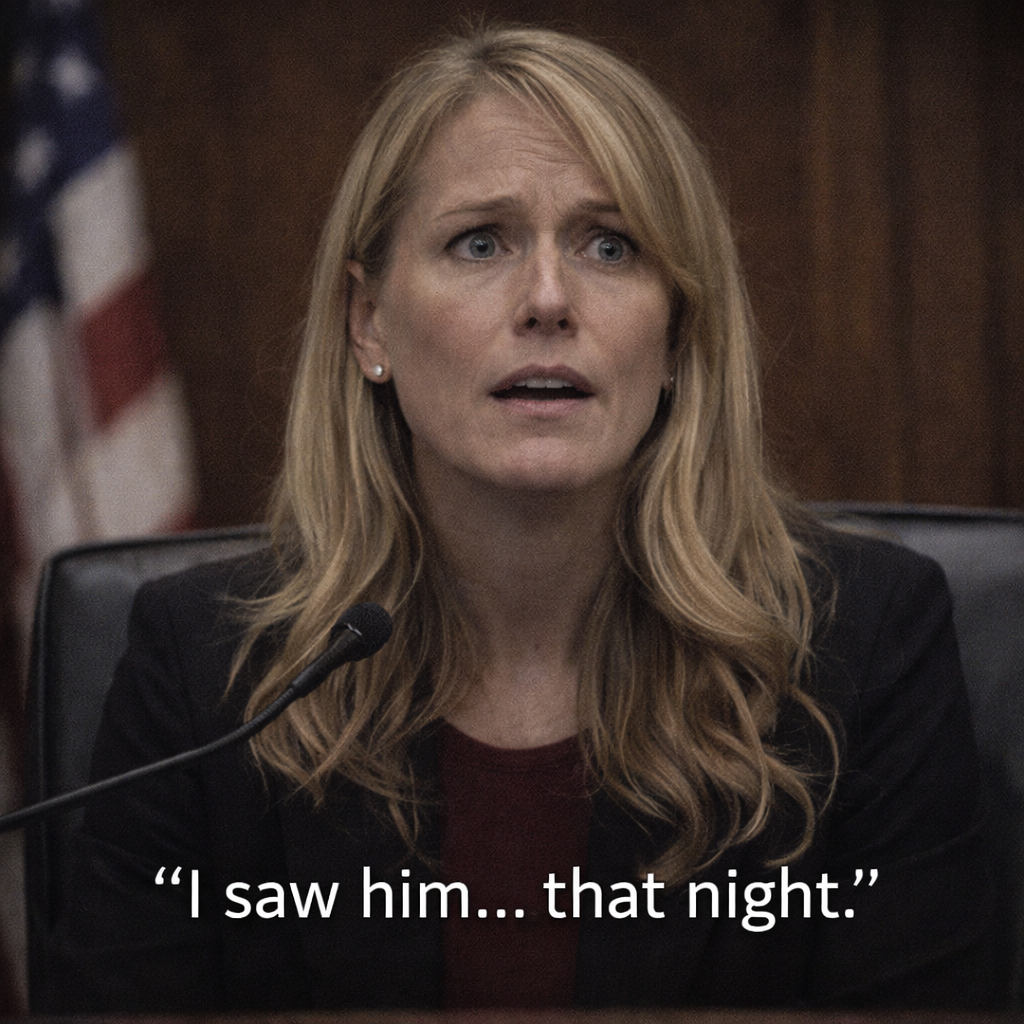
She was young, composed but visibly nervous, her hands folded tightly as she took her place. The simple act of sitting in the witness chair seemed to carry more weight than she had anticipated. Her breathing was careful, measured, as if each word required courage.
The judge nodded gently, offering reassurance without speaking.
After the oath, silence returned.
Then she spoke.
“I saw him… that night.”
Her voice trembled just enough to reveal the memory was not easy to revisit. The words drifted across the courtroom and settled into the attentive stillness of everyone listening.
At the prosecution table, confidence appeared to strengthen. The statement seemed clear, direct—another step toward resolution.
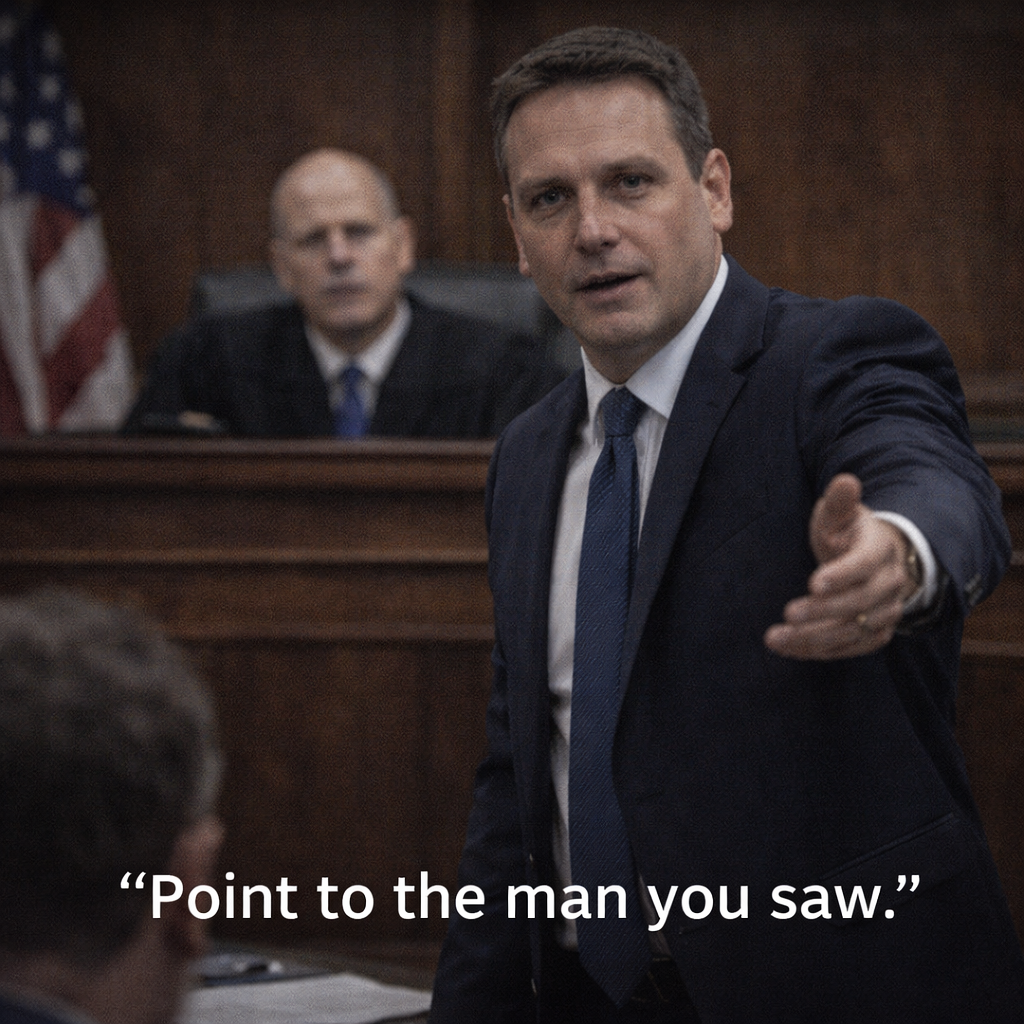
The prosecutor stepped forward calmly.
“Can you point to the person you saw?”
The question felt routine.
But the answer would not be.
The Direction of a Single Hand
For a moment, the witness did not move.
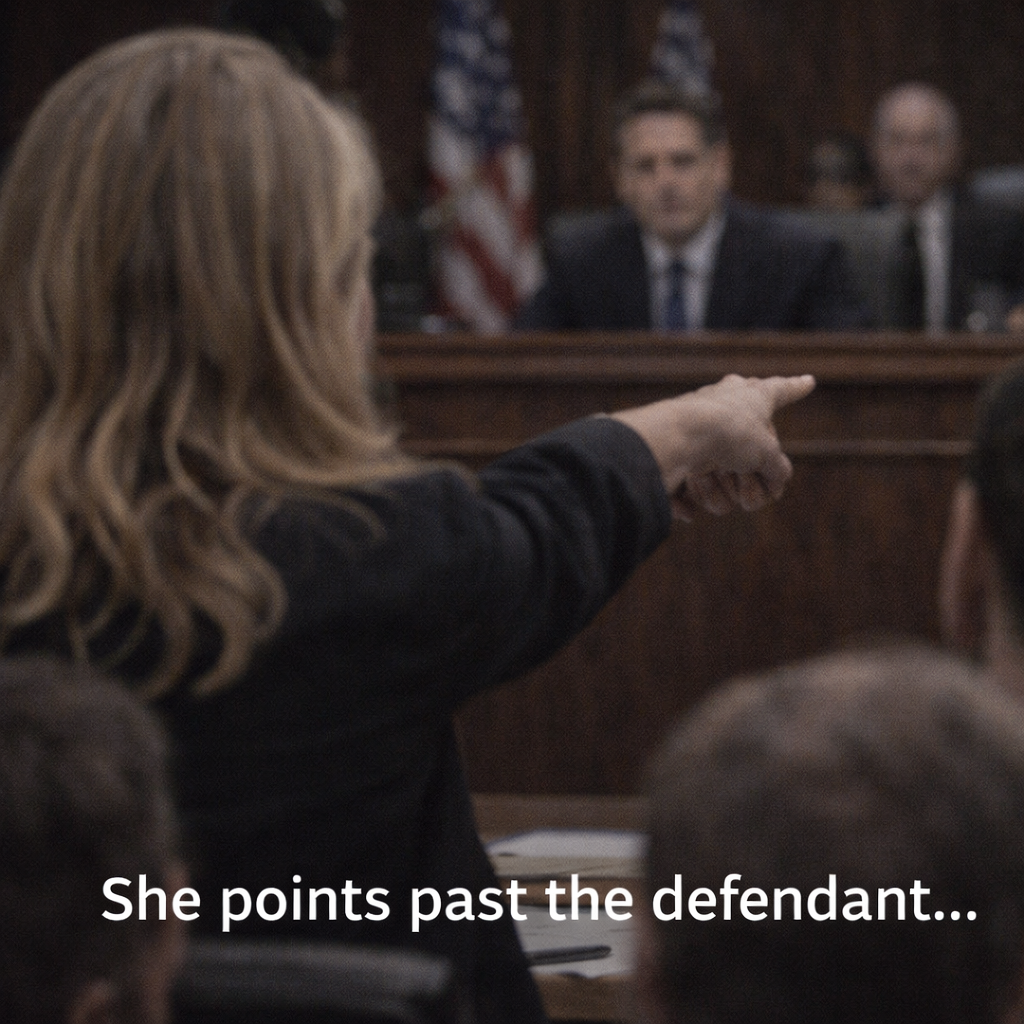
Her eyes traveled slowly across the room—past the jurors, past the spectators, past the defendant seated quietly at the defense table.
The stillness stretched.
Then her hand began to rise.
Every person in the courtroom followed the motion.
Some leaned forward slightly.
Others held their breath without realizing it.
The hand continued upward… then extended outward.
But not toward the defendant.
Instead, her finger pointed beyond him—toward someone no one expected.
The defense lawyer.
A quiet murmur rippled through the courtroom like wind across still water. The shift was subtle, yet impossible to ignore. Surprise spread from one face to another, moving silently but quickly.
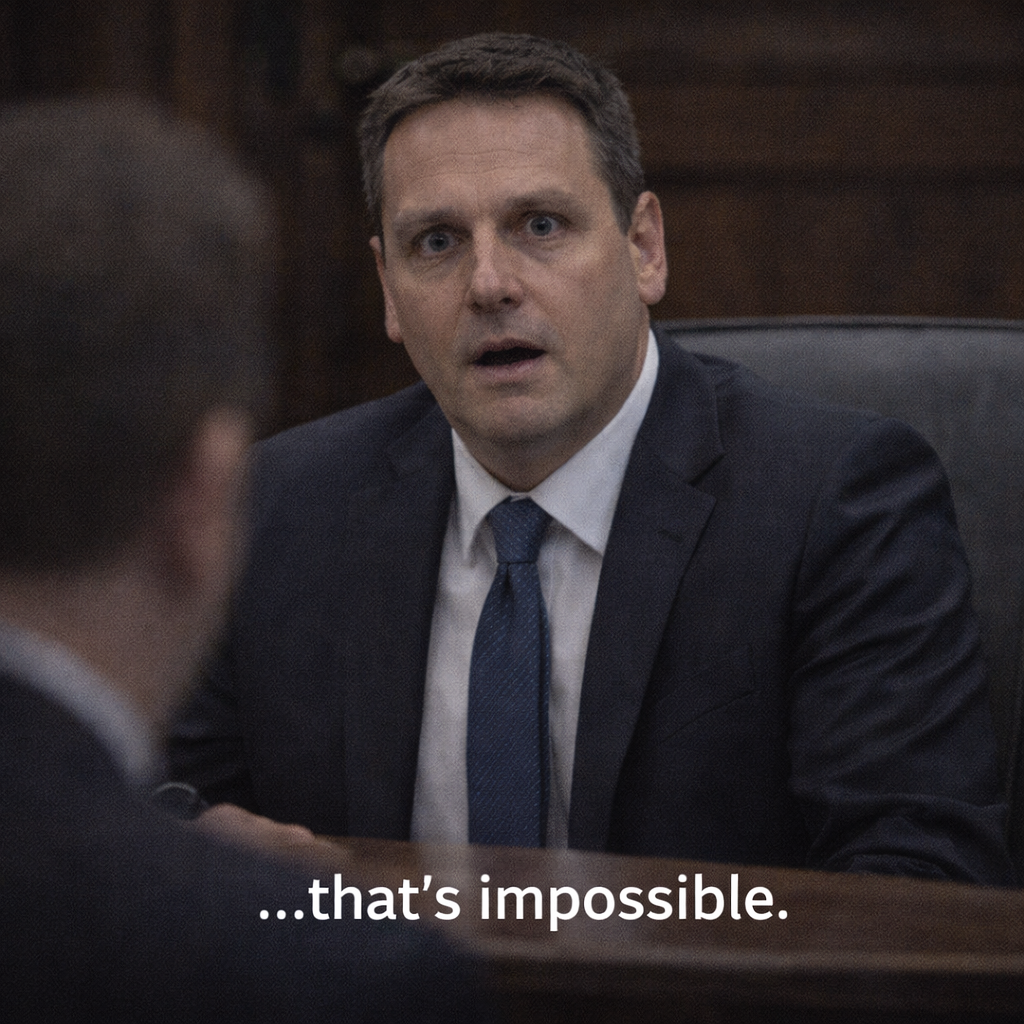
At the defense table, the lawyer froze.
For the first time in the trial, certainty left his expression. His composure, carefully maintained for weeks, faltered in a single second.
“…that’s impossible,” he whispered, barely audible.
Yet in the silence, everyone heard.
When Certainty Begins to Crack
The judge leaned forward slightly, his attention sharpening.
Moments like this were rare—moments when the expected path of a trial suddenly changed direction. Years of experience had taught him not to rush, not to assume, but to listen carefully when something did not fit.
“Please clarify your statement,” he said calmly.
The witness swallowed, gathering courage.
Her eyes did not move from where she pointed.
“He told me… to stay quiet.”
The words were soft, yet they carried through the room with unmistakable weight.
Silence followed.
Not ordinary silence—
but the kind that makes time feel slower.
Jurors exchanged uncertain glances.
The prosecutor’s confidence faded into confusion.
Spectators sat motionless, unsure what the moment meant.
At the center of it all, the defense lawyer remained still, as though the world had paused around him.
The trial, once predictable, had become uncertain.
Questions Without Immediate Answers
No one spoke for several long seconds.
The courtroom waited—not for drama, but for understanding. Because real trials are not defined by sudden emotion, but by careful examination of truth.
The judge’s expression remained controlled, thoughtful. His responsibility was not to react quickly, but to ensure that every word, every claim, every detail received the attention justice requires.
“Counsel,” he said evenly, “the court will address this matter with appropriate review.”
It was not an accusation.
It was not a conclusion.
It was something more important:
a pause for truth.
Across the room, the defendant watched quietly. There was no triumph in his face, only the same calm patience he had shown from the beginning.
Because sometimes the most powerful moments in a courtroom are not loud.
They are quiet shifts—
small changes that open the door to deeper understanding.
The Moment Everything Slowed Down
As proceedings paused, the atmosphere of certainty dissolved into reflection.
What had seemed simple now felt complex.
What had appeared clear now required careful thought.
And in that space between question and answer, the purpose of the courtroom became visible again:
Not to rush.
Not to assume.
But to search—patiently and honestly—for truth.
The witness lowered her hand slowly, her courage giving way to quiet relief. Speaking had not been easy, yet something within her seemed steadier now.
Around her, the courtroom remained silent.
Because everyone understood that the story of the trial had changed.
And whenever truth changes direction, justice must follow carefully behind.
When Truth Speaks Softly
Long after the session ended, people would remember the moment not for its shock, but for its stillness.
A single question.
A single gesture.
A single quiet sentence.
Sometimes that is all it takes to remind a courtroom—and the world watching—that truth does not always arrive where we expect it.
But when it does appear, even softly, it deserves to be heard.
Key Takeaways
- Truth may emerge from unexpected voices.
- Justice requires patience, not speed.
- Careful listening is essential in difficult decisions.
- Small moments can change entire outcomes.
- Fairness depends on the courage to examine every detail.
He did it ,his body language says it all .