
Courtrooms are built on what happens and what happens next.
First something happens.
Then it is written down.
Then it is kept safe.
Evidence does not move backward in time.
At least it is not supposed to.
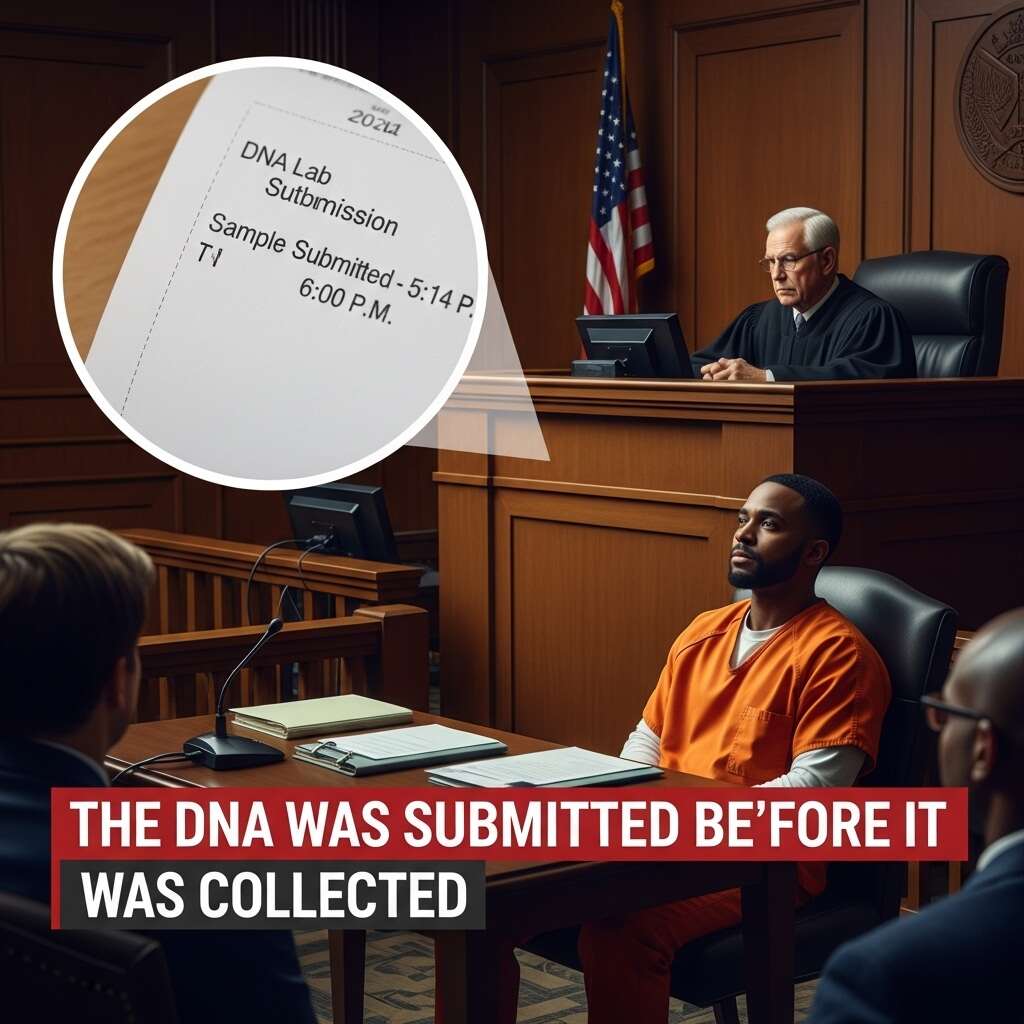
The Defendant
The defendant sat quietly at the defense table. He wore a jumpsuit that was slightly creased at the elbows. His hands were resting together calmly. He had listened to days of people talking about analysis and lab protocols and scientific certainty.
The prosecution’s case was based heavily on DNA.
The DNA Evidence
A swab was taken from the handle of a storage unit door. It matched the defendant’s profile. According to the state this meant the defendant was at the scene the night the theft happened.
For most of the trial the science sounded good.
It sounded precise.
Clinical.
Unemotional.
The Time Question
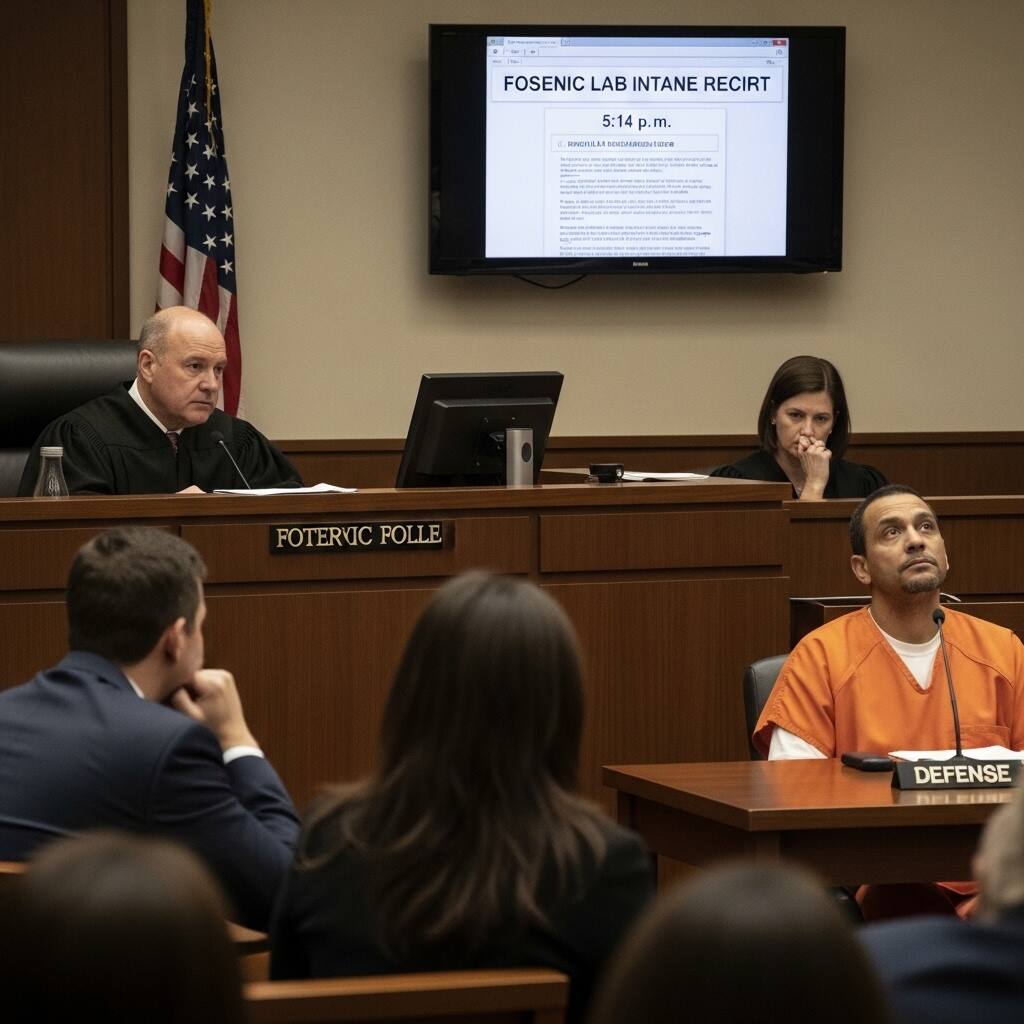
Now the judge put on his glasses. Spoke.
“Clerk, confirm the time the DNA was sent to the lab.”
The room became quiet.
The clerk looked at the chain-of-custody documentation on the courtroom monitor.
Her voice was clear.
“Sample was sent at 5:14 p.m.”
The jury moved slightly.
5:14 p.m.
The prosecutor nodded a little. He looked satisfied.
The defendant’s eyes lifted slowly.
Not with anger.
Not with panic.
With precision.
His voice was low and controlled when he spoke.
“Evidence was not collected until six.”
The Contradiction
The prosecutor stiffened.
Pens stopped moving in the jury box.
The judge leaned forward.
“Clerk, read the collection time again.”
The clerk looked at the police evidence report. She swallowed once.
“Collection was logged at 6:02 p.m.”
The room became silent.
Because time does not reverse.
A sample cannot be sent before it is collected.
Forty-Eight Minutes
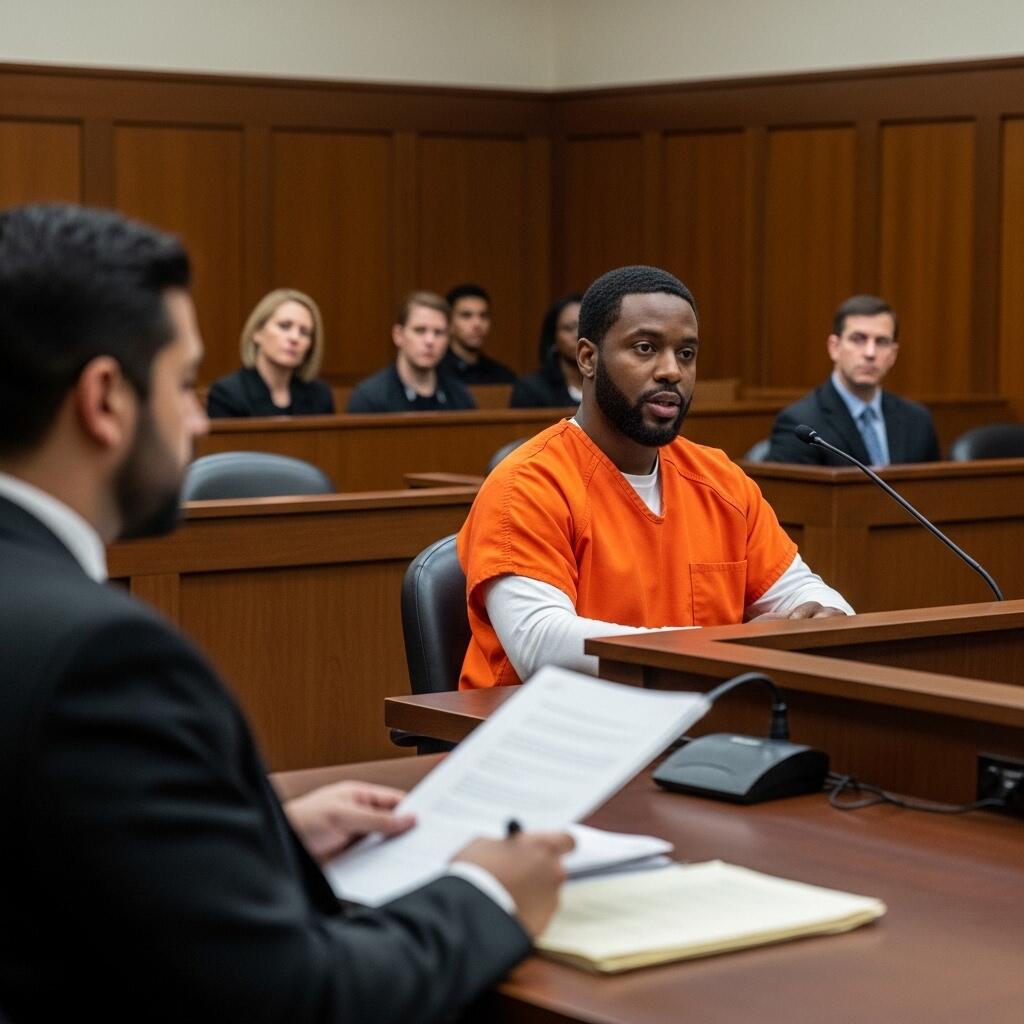
The prosecution stood up quickly.
“Your Honor, the time the sample was sent may show that the lab was getting ready to receive it.”
The judge’s tone became sharper.
“The time the sample was sent shows when the lab got it.”
He turned to the clerk.
“Is there any note that explains that time?”
“No, Your Honor. The receipt says: ‘Sample received. 5:14 p.m.'”
The jurors leaned forward.
The defense attorney stood calmly.
“Your Honor, according to Officer Martinez’s report the scene was secured at 5:38 p.m. And the swab was collected at 6:02 p.m.”
The judge nodded slowly.
“Officer Martinez said that under oath.”
The prosecutor shifted his weight.
“It may be a mistake in writing.”
The judge looked directly at him.
“A mistake of forty-eight minutes?”
No one answered.
Because forty-eight minutes is not a mistake.
It is a gap.
The Lab Technician
The prosecution asked for the lab technician to come back.
She entered with posture but cautious eyes.
“Did you get this sample at 5:14 p.m.?”
“Yes.”
“From whom?”
“Officer Martinez.”
“What time did Officer Martinez get here?”
“I do not remember the minute.”
The defense turned to the report on the monitor.
“Officer Martinez wrote that he left the scene at 6:21 p.m.”
The courtroom took that in slowly.
If the officer left at 6:21 p.m., he could not have given the sample at 5:14 p.m.
The System
“Is the lab system automated?”
“Yes.”
“Does it put a time stamp when it scans?”
“Yes.”
“Can that time be changed manually?”
“Not without a supervisor’s access.”
Now the issue was not a mistake.
It was about the system working correctly.
The Officer Returns
“You collected the DNA swab at 6:02 p.m. Correct?”
“Yes.”
“You left the scene at 6:21 p.m.?”
“Yes.”
“What time did you get to the lab?”
“6:45.”
The math showed the problem.
6:45 arrival.
5:14 submission.
Impossible.
“The times speak for themselves,” the judge said.
The Jury’s Reaction
Jurors are trained to look at evidence.
They are human.
Humans understand time.
You cannot get something before it exists.
The prosecution’s strongest evidence — the DNA match — was not as strong as before.
The Access Log
The defense asked for lab system access logs.
A new document appeared on the screen.
System access history.
At 5:10 p.m. a supervisor account logged into the lab intake module.
At 5:13 p.m. it was assigned to the defendant’s case number.
At 6:47 p.m. the entry was changed.
The courtroom became still.
“Who has supervisor access?”
“My supervisor.”
“Was she here at 5:12 p.m.?”
“She left at 4:30.”
“Was remote access allowed?”
“Yes.”
Now the question was not about the DNA matching.
It was about how the sample got into the system before it was physically delivered.
The Process
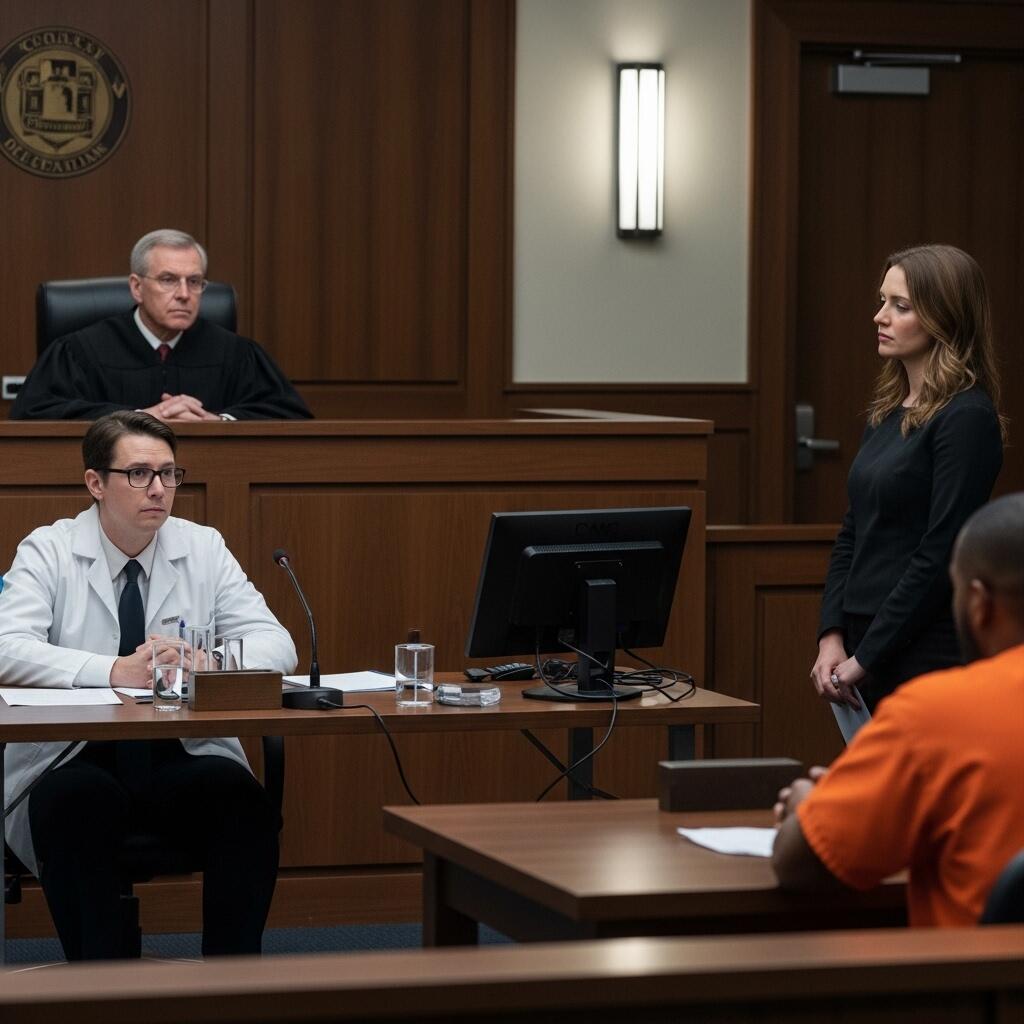
DNA is powerful in courtrooms.
It sounds like the truth.
Scientific.
Irrefutable.
But even science depends on the process.
Getting the evidence.
Moving it.
Sending it.
Looking at it.
If any step is wrong, the result is not as strong.
“If the chain of getting the evidence is broken,” the judge said slowly, “the evidence becomes questionable.”
No one objected.
Because that statement was true.
The Seed of Doubt
The judge announced a break in the trial.
“You are not to guess. The court will decide if the difference in times affects the evidence.”
The seed had been planted.
Even if the DNA was allowed, its certainty had diminished.
The Unchanged Times
The judge looked at the clerk again.
“Confirm once more the collection time.”
“6:02 p.m., Your Honor.”
“And the submission time?”
“5:14 p.m.”
The contradiction remained.
Evidence does not arrive before it is collected.
If it seems to, something is wrong.
The Question No One Could Answer
The judge ordered a review of lab intake procedures.
Morning internal lab audit records were introduced.
At 5:10 p.m. a test entry labeled “Case 417-DNA” had appeared.
What is the reason the sample ID was changed after the officer got there?
The defendant did not move.
If a file was already made before they looked at the evidence—
Then what did they match in the lab
when they looked at the evidence
from the sample ID?
[…] DNA Was Submitted Before It Was Collected […]