
The Timestamp That Changed the Trial
The courtroom felt unusually still that afternoon, as though even time itself had slowed to watch what would happen next.
Sunlight filtered through the tall federal windows, stretching across polished wooden floors and the silent rows of spectators seated behind the railing. Weeks of testimony had led to this moment. Every argument had been spoken. Every piece of evidence had been examined.
Only one step remained.
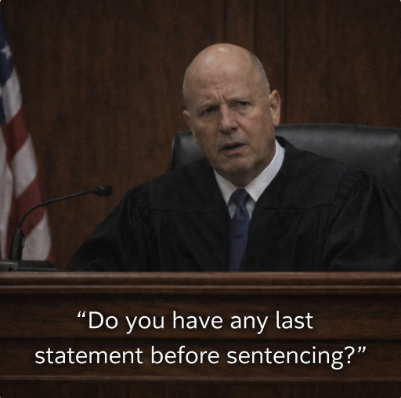
At the center of the room, the judge sat upright behind the bench, hands resting calmly before him. His expression was composed, practiced—the look of someone who had delivered many final decisions in his career.
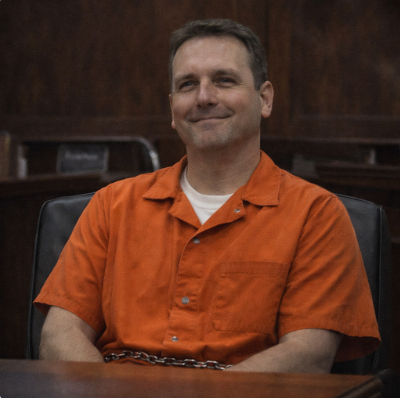
Across the room, the defendant waited in chains.
He did not appear nervous.
He did not look afraid.
Instead, he sat quietly, watching the courtroom with an unreadable calm that made several people uneasy without knowing why.
The attorneys stood ready at their tables.
The jurors watched closely.
No one wanted to miss the final moment.
The judge inhaled slowly and began to speak.
“Do you have any last statement before sentencing?”
His voice was steady, formal, and final—the kind of tone that usually marked the end of uncertainty.
Silence followed.
All eyes turned toward the defendant.
A Smile No One Expected
For a few seconds, the defendant did not move.
Then, slowly, he lifted his head.
What happened next was so small that many almost missed it.
He smiled.
Not broadly.
Not mockingly.
Just a faint, quiet smile—as if he understood something no one else in the room did.
A murmur passed softly through the spectators. One juror leaned forward slightly. Even the defense attorney looked surprised.
This was not how people usually reacted at the edge of sentencing.
The judge noticed too. His eyes narrowed just enough to show that the moment had shifted.
Finally, the defendant spoke.
His voice was calm. Respectful. Almost gentle.
“Yes… just one thing.”
He paused briefly, letting the silence settle deeper.
Then he said the words that would change everything.
“Check the security camera timestamp.”
The Screen Above the Courtroom
At first, the sentence didn’t seem important.
Several people frowned in confusion.
One attorney glanced at another.
The jurors exchanged uncertain looks.
But the judge did not dismiss it.
Years in the courtroom had taught him that unexpected calm often carried meaning.
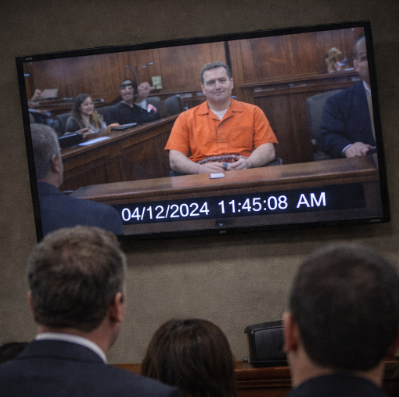
Slowly, he looked upward—toward the security monitor mounted high on the courtroom wall.
The clerk hesitated only a moment before pulling up the requested footage.
The screen flickered.
Static.
Then an image appeared.
A timestamp glowed in the corner.
The exact time connected to the central question of the entire trial.
The room grew quieter than it had ever been.
Every person looked up at the screen.
And then… understanding began to spread.
Because visible in the footage—clear, undeniable, impossible to mistake—
was the defendant.
Sitting inside the courtroom.
At the very same time the questioned event had taken place elsewhere.
Silence Louder Than Words
No one spoke.
The meaning needed time to settle.
A soft sound echoed as someone in the gallery shifted in their seat.
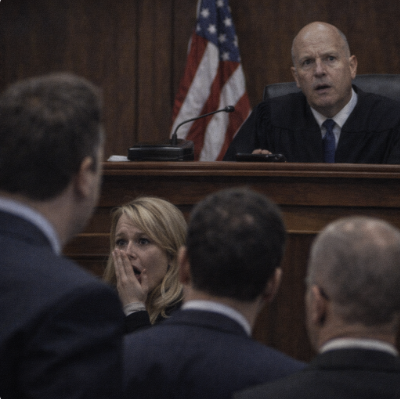
One juror covered her mouth in disbelief.
Another stared at the screen without blinking.
The attorneys looked frozen between confusion and realization.
At the center of it all, the judge remained perfectly still.
His expression did not show shock.
But something deeper had changed—
the careful certainty built over weeks of testimony had begun to crack.
Evidence was meant to clarify truth.
But truth, in that moment, had become uncertain again.
Slowly, the judge looked down from the screen.
His eyes moved to the defendant.
The faint smile was gone now.
In its place was simple calm.
Not victory.
Not relief.
Just patience.
As if he had known this moment would arrive all along.
Questions Without Immediate Answers
The courtroom waited.
What did the timestamp mean?
How could the timelines exist together?
What had been misunderstood?
No one yet knew.
But one thing was clear:
The story everyone believed was no longer complete.
Trials are built on sequence—
events leading logically to conclusions.
Yet the image on the screen had interrupted that sequence entirely.
The judge folded his hands slowly, thinking with the careful discipline his role required.
Justice was not about speed.
It was about certainty.
And certainty had just disappeared.
When Truth Demands Patience
Minutes passed in thoughtful silence.
No dramatic words.
No sudden decisions.
Only the quiet recognition that something important required deeper understanding.
The judge finally spoke, his voice calm but different now—less final, more searching.
“This court will review the presented timestamp and all related evidence before proceeding further.”
It was not a conclusion.
But it was the beginning of something more important than a quick ending:
Clarity.
Because real justice is not proven by how fast a decision is made…
but by how carefully the truth is uncovered.
The defendant lowered his eyes again, returning to stillness.
Around him, the courtroom slowly began to breathe once more.
Yet nothing felt the same.
The Moment That Redefined Everything
Long after the session paused, people would remember that single sentence:
“Check the security camera timestamp.”
Not because it ended the trial—
but because it reminded everyone of something essential:
Truth can appear where least expected.
Certainty can change in an instant.
And fairness requires the courage to pause when something doesn’t fit.
In the quiet architecture of the courtroom, where decisions shape lives,
one unexpected detail had done what arguments could not—
It had reopened the search for truth.
And sometimes…
that is where justice truly begins.
Key Takeaways
- Calm moments can hold powerful turning points.
- True justice depends on careful review, not rushed conclusions.
- Evidence must be understood fully before decisions are final.
- Unexpected details can reveal deeper truth.
- Patience is essential in any search for fairness and clarity.
It greteness to find the truth that the repurment that the blessing of honest
😊