
The Juror Who Broke the Silence
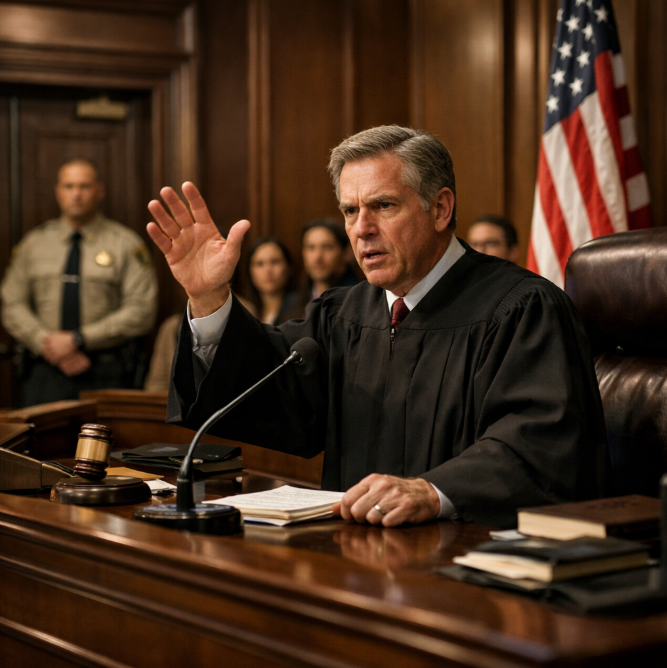
The courtroom carried the quiet tension that comes just before a verdict is read. Weeks of testimony had led to this final afternoon. Evidence had been reviewed, witnesses questioned, arguments examined from every angle. Jurors sat upright in their box, composed and attentive.
Attorneys stood at their respective tables, organized and prepared. Spectators filled the gallery, aware that the next few moments would decide everything.
At the bench, the judge adjusted the verdict form and looked toward the jury.
“Has the jury reached a unanimous decision?”
The foreperson stood confidently. “Yes, Your Honor.”
A shared breath seemed to move through the room.
The foreperson opened his mouth to speak.
Before a word could be delivered, a chair shifted sharply.
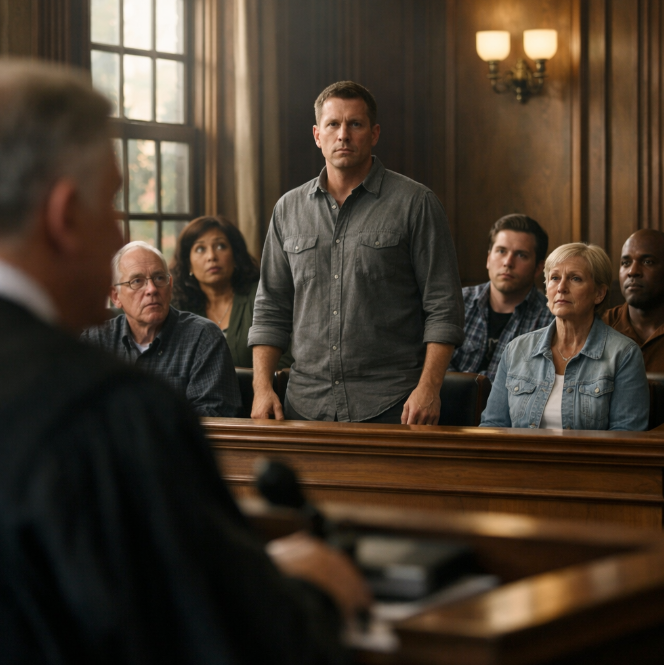
A juror in the middle row stood.
When Silence Is No Longer Possible
“Your Honor,” the juror said, voice firm but controlled, “I can’t stay silent.”
Gasps echoed across the courtroom. The foreperson froze mid-sentence. The prosecution team turned quickly toward the jury box. The defense attorney stared in disbelief.
The judge leaned forward slightly.
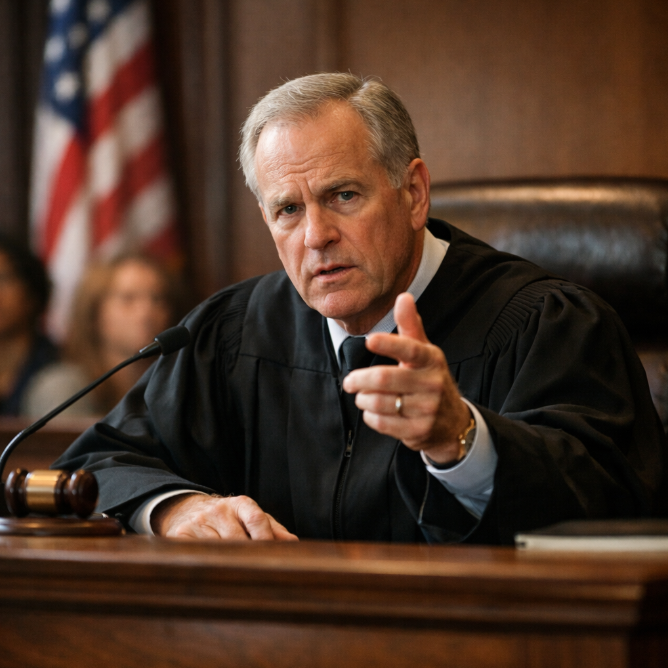
“You will sit down unless you have cause,” he said evenly.
The juror remained standing.
“I have cause,” he replied.
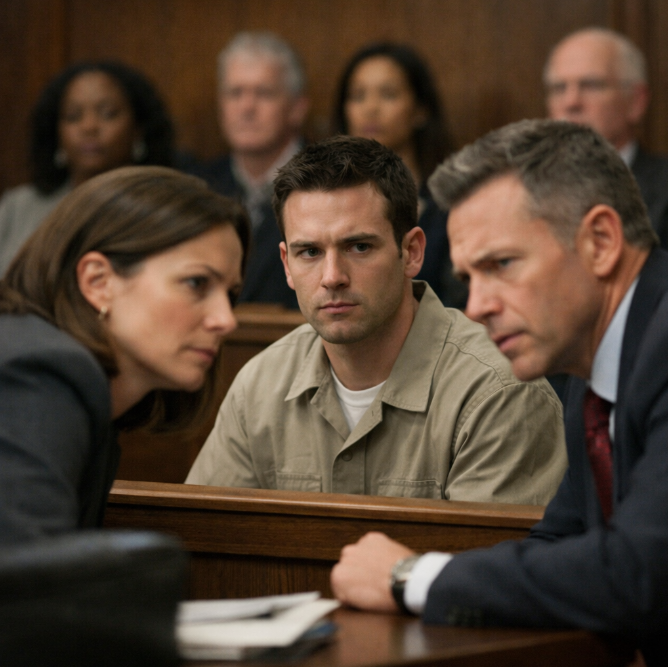
The courtroom fell completely silent. Even the faint sounds of movement ceased. The defendant watched closely, unsure whether this interruption signaled hope or uncertainty.
The judge maintained composure.
“State your concern clearly.”
The juror took a steady breath.
“Someone contacted me last night.”
Whispers erupted through the gallery before being quieted by the bailiff. The judge raised his hand for order.
“This is a serious claim,” the judge said calmly. “Explain.”
The juror’s voice remained steady.
“I received a message implying that my vote would have consequences.”
The words hung in the air.
The Weight of Responsibility
Trials depend on impartial jurors. The integrity of a verdict rests on the assurance that no outside influence shapes deliberation. Even the suggestion of interference demands attention.
The prosecution attorney stepped forward. “Your Honor, we were unaware of any such communication.”
The defense attorney added, “We request immediate clarification.”
The judge nodded.
“This court will address this matter thoroughly. Juror, you are to describe the contact in detail.”
The juror spoke carefully.
“The message was indirect. It did not mention the case by name, but it referenced details known only within these proceedings.”
The jurors around him exchanged uneasy glances. The foreperson lowered the verdict form slowly.
The judge addressed the entire jury.
“Has anyone else received communication regarding this case?”
No other juror stood. However, the tension in the room suggested that the moment had unsettled everyone.
The judge turned to the bailiff. “Secure the courtroom doors.”
The sound of them closing reinforced the seriousness of the situation.
Protecting the Integrity of the Process
The judge remained calm but firm.
“The cornerstone of our justice system is impartial decision making. Any external contact undermines that foundation.”
He addressed the standing juror directly.
“Did this communication alter your vote?”
“No, Your Honor,” the juror replied. “But it made me question whether silence would compromise fairness.”
The judge nodded thoughtfully.
“Your responsibility is not only to deliberate honestly but to report any irregularity immediately.”
The prosecution attorney spoke again. “Your Honor, we request a brief recess to evaluate whether further inquiry is necessary.”
The defense attorney agreed. “Transparency is essential.”
Related Stories:
The judge considered the situation carefully. Rushing forward could risk invalidating the verdict. Ignoring the claim would risk damaging trust.
“This court will suspend proceedings while the matter is reviewed,” he announced.
The gavel struck lightly.
The jurors were escorted to a private room. Court officers began documenting the juror’s statement. Legal counsel conferred quietly.
Spectators whispered among themselves, aware they were witnessing something rare. Not chaos. Not drama.
Accountability.
When Integrity Takes Priority
After a brief recess, the jurors returned to the courtroom. The judge addressed them with steady authority.
“Juror, your statement has been documented. An inquiry will determine whether the communication originated from an external source connected to this case.”
The juror nodded.
The judge then addressed the full panel.
“You are reminded that your deliberations must remain based solely on evidence presented in this courtroom. External messages, if verified, will be investigated thoroughly.”
The defendant watched carefully. The prosecution appeared serious but composed. The defense attorney remained attentive.
The judge continued.
“If interference is confirmed, the court will take appropriate action to preserve fairness.”
The juror slowly returned to his seat.
The foreperson held the verdict form once more, but the atmosphere had changed. The decision would not be rushed. Confidence in the process mattered more than speed.
The Larger Lesson
The courtroom moment served as a reminder that justice depends on vigilance. Jurors are not merely participants. They are guardians of impartiality.
The standing juror’s decision to speak did not disrupt justice.
It protected it.
By raising concern before the verdict was delivered, he ensured that the final decision would rest on untainted deliberation.
The judge addressed the courtroom one final time.
“This court appreciates the courage required to report potential irregularities. Fairness requires honesty at every stage.”
The jurors nodded collectively.
The trial would continue, but now with reinforced awareness.
Why This Moment Matters
This courtroom event highlights essential principles:
• Juror impartiality is foundational to justice
• Reporting external contact protects integrity
• Courts must investigate any claim of interference
• Transparency builds public confidence
• A pause in proceedings can safeguard fairness
• Courage in raising concerns strengthens the system
The moment when the juror stood was not a breakdown in procedure.
It was a demonstration of responsibility.
Justice is not only about delivering a verdict.
It is about ensuring the verdict is free from outside influence.
And sometimes, protecting that principle begins with one person standing up and refusing to stay silent.