
When Sound Becomes Evidence
Courtrooms usually do not react to sound. They react to words.. That afternoon the sound itself changed everything.
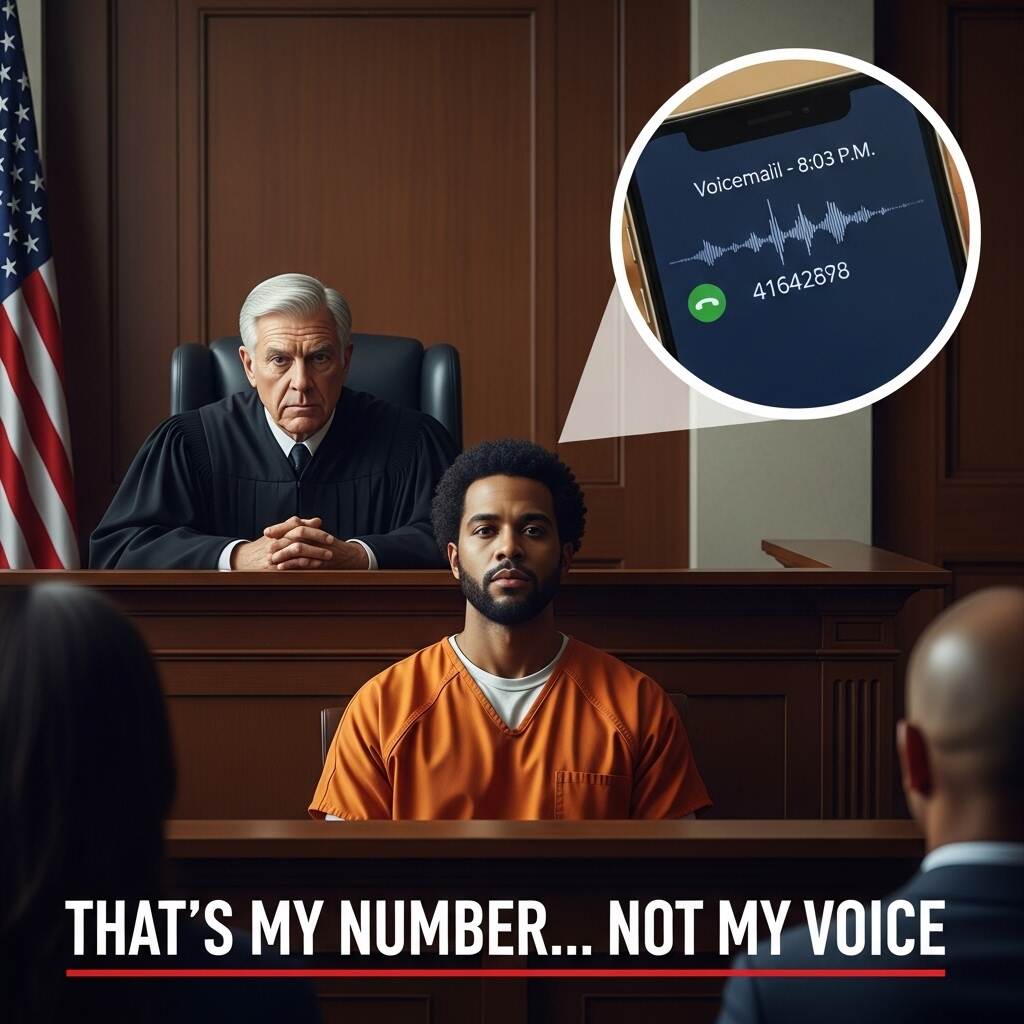
The Playback Order
The defendant sat at the defense table in a jumpsuit. He was still with his hands folded loosely in front of him. For most of the trial he had remained controlled. He was almost unreadable. The prosecution had presented security footage call logs and timeline charts connecting him to the night of the break-in.
None of it had landed as hard as what the judge was about to order. The judge adjusted his glasses. Spoke firmly. “Play the 8:03 voicemail.” The room became very quiet. The defendants eyes lifted slowly. He hadn’t reacted to documents. He hadn’t reacted to timestamps.. This made him look up.
The clerk pressed a key. A faint hiss of speaker feedback echoed across the courtroom. Then the recording began. A clear male voice filled the air. “I’m outside. Open the door.” The message was short. It was direct. It was personal. A sharp murmur spread through the jury box. Because the voicemail had been left on the victim’s phone at 8:03 p.m.. Minutes before the door was forced open.
The prosecution had already established that the number attached to that call belonged to the defendant. The jurors had seen the call log. They had seen the carrier records. Now they were hearing the voice. It sounded confident. It was unhurried. It was certain. The playback ended. Silence pressed in. The prosecutor looked satisfied.. At the defense table the defendant remained calm. He was almost cold.
“That’s My Number. Not My Voice.”
He leaned slightly toward his attorney. Then spoke clearly enough for the judge to hear. “That’s my number ” he said evenly. “Not my voice.” The prosecutor froze mid-motion. A juror stopped writing. The judge leaned forward slowly. “You’re disputing the identity of the speaker?” he asked. “Yes Your Honor.” “You acknowledge the number?” “Yes.” “. Not the voice.” The defendant nodded once. “That’s not me.”
Voices are personal. They carry tone, rhythm, breath. Most people recognize their own immediately. The prosecution rose carefully. “Your Honor the phone records show the call originated from the defendant’s registered device.” The judge nodded. “We’ve seen the carrier data.” The defense attorney stood calmly. “Carrier data confirms the number ” she said. “Not the speaker.” The prosecutor responded quickly. “Your Honor the voicemail was left from his phone.” The defendant spoke again controlled but steady. “. From someone using it.”
Tracing the Origin
A ripple moved through the room. Because now the case wasn’t about a number. It was about identity. The judge turned to the clerk. “Trace the origin of that call.” The courtroom seemed to inhale. Because tracing origin is different from reading logs. Logs show numbers. Tracing shows movement.
The clerk accessed the digital call routing data provided by the telecommunications company. The screen displayed tower pings and switch routing paths. “Call initiated at 8:03 p.m. ” the clerk read. “Connected through tower ID 14C.” The prosecutor pointed to a map displayed earlier in trial. “Tower 14C covers a two-mile radius around the victim’s address.” The implication was clear. The call came from nearby. The defendant didn’t react. He was listening.
SIM Card vs Device
The defense attorney raised her hand slightly. “Your Honor may the clerk display device authentication logs?” The prosecutor objected. “Relevance?” The judge overruled. “If the defendant disputes identity authentication becomes relevant.” The clerk navigated deeper into the records. A new screen appeared. Device ID. IMEI number. SIM registration. The jurors leaned forward. “Clerk ” the judge said calmly “does the record confirm the device ID matched the defendant’s registered handset?” The clerk hesitated. “It confirms the SIM card ” she said slowly. “. Not the physical device.”
The silence deepened. Because SIM cards can be moved. Devices can be swapped. Numbers can travel. The prosecutor shifted again. “Your Honor spoofing is unlikely without tools.” The defense attorney responded quietly. “It is not impossible.” The judge’s tone remained measured. “We will deal in evidence not assumptions.” The defendant remained composed. Because this wasn’t about denying ownership of the number. It was about separating the number from the voice.
Metadata
The judge gestured toward the technician. “Is there metadata attached to the file?” The technician nodded. “Yes Your Honor.” “Display it.” The file properties appeared on screen. Audio format. Compression rate. Device signature. The technician frowned slightly. “The encoding signature does not match the defendant’s phone model.” A quiet stir passed through the courtroom. The prosecutor stiffened. “Explain.” “The voicemail file shows compression of a different handset brand.”
The jurors exchanged glances. Because the voice didn’t just sound different. The file suggested it came from else. The defendant remained steady. He wasn’t smiling. He wasn’t triumphant. He was precise. Because sometimes the strongest defense is not emotion. It’s consistency. “That’s my number ” he repeated softly. “Not my voice.” The judge folded his hands. “Is there evidence the defendant’s phone was in his possession at 8:03 p.m.?” The prosecutor glanced through his notes. “No direct witness testimony, Your Honor.”
Location Data
“Location data?” The clerk checked. “Phone pinged tower 14C at 8:02 p.m.” The defense spoke again. “Your Honor, tower coverage overlaps with the defendant’s apartment complex.” The map confirmed it. The defendant’s residence sat within the coverage radius. Meaning the call could have originated from near his home.. Near the victim’s address. The tower alone could not distinguish.
The defense requested playback again. The judge allowed it. The voicemail echoed more. “I’m outside. Open the door.” This time jurors listened differently. Less as confirmation. More as examination.
Voice Comparison
The defense attorney asked quietly “Your Honor may we introduce the defendant’s known voice sample from his police interview?” The prosecutor objected, paused. The judge allowed comparison.
The two recordings were played back-to-back. The police interview voice was deeper. It was measured. It was distinct in cadence. The voicemail voice was sharper. It was faster. It was subtly different. Not dramatically.. Noticeably. A juror frowned slightly. The prosecutor remained silent. Because arguing with sound is difficult.
Internet Relay
The judge leaned forward again. “Clerk… confirm whether the voicemail file passed through any third-party routing service.” The technician scanned the routing metadata. “Yes Your Honor.” A murmur. “It shows routing through an internet-based voice relay before carrier transmission.” The prosecutor closed his eyes briefly. Because that introduced a possibility. Voice over IP. Call masking. Digital relay.
The Source IP
The judge’s voice remained calm. “If the call was routed through a relay service is there a source IP?” The technician nodded slowly. “Yes.” “Trace it.”
The technician typed carefully. Seconds stretched. Finally the technician spoke. “The originating IP address resolves to a Wi-Fi network.” “Location?” “Coffee shop on Lincoln Avenue.” A ripple passed through the room.
Lincoln Avenue was three blocks from the victim’s address.. Two miles from the defendant’s apartment.
The Grocery Receipt
The prosecutor looked toward the defendant. “Do you frequent that location?” The defendant shook his head slowly. “No.” “Can you prove that?” “My bank card shows I was at a grocery store at 7:58 p.m.” The defense attorney nodded. “We submitted that transaction record yesterday.”
The judge glanced at the file. Confirmed. 7:58 P.m. Grocery purchase. Five miles, in the direction.
Driving five miles through evening traffic in five minutes is really unlikely. It is not that it can never happen.. It is not something that you would expect to happen every day.
The Unanswered Question
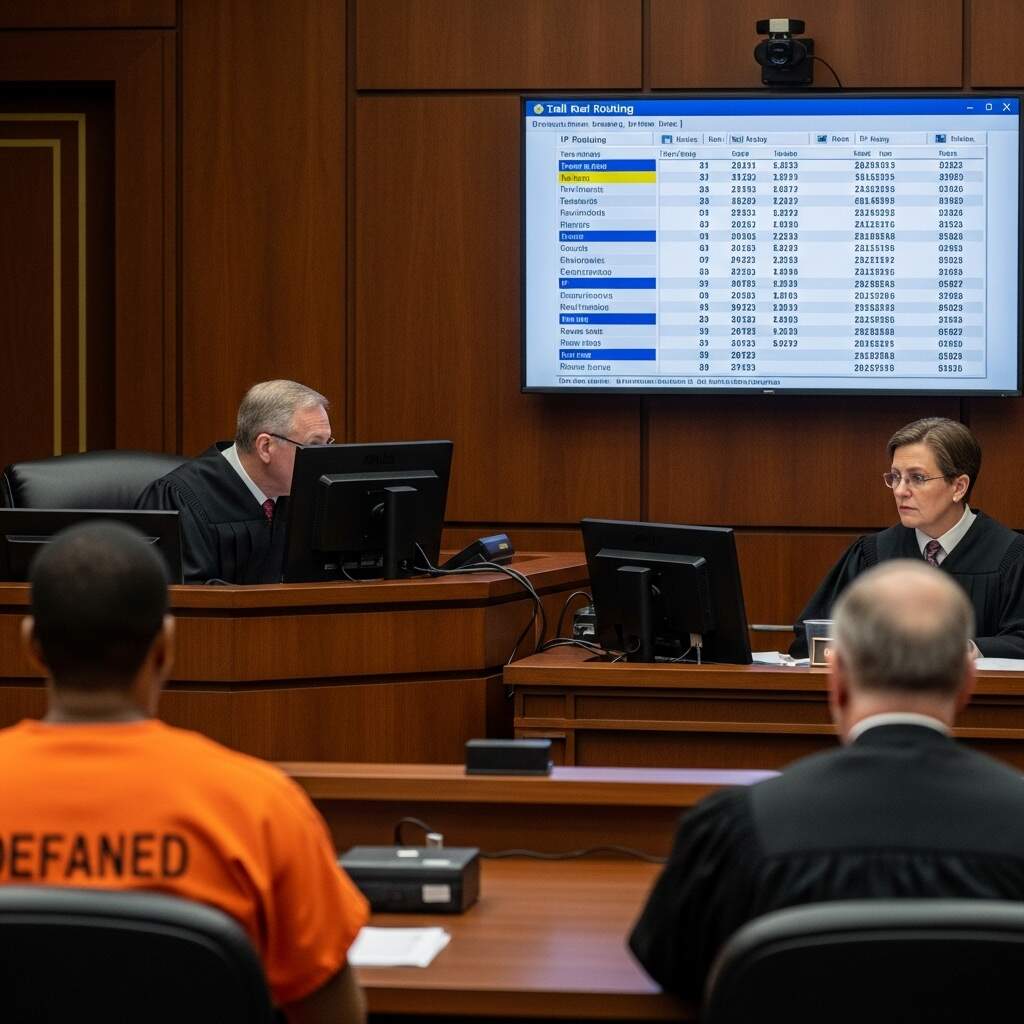
The judge leaned back in his chair slowly. The voicemail did not seem simple anymore. It seemed like something that was put together on purpose. The prosecutor tried to come up with one argument. “Your Honor the defendant could have left his phone somewhere ” he said.
The defense team responded in a manner. “Then the state needs to prove that ” they said. There was silence again. This is because just because something is possible it does not mean it is true.
The judge turned to the clerk. “Make a note that the call origin does not match the idea that the defendant was the one with the phone ” he said. “Yes Your Honor ” the clerk replied. The defendant did not move. He was not happy that he had won. He was not relieved that things were going his way. He was just calm.
Technology can be very accurate.. It can also be used to deceive people. Sometimes the truth is hidden in the details of how something was done.
The Cut
The judge spoke one time before the court took a break. “We will not make a decision about this voicemail until we know the story of how it was made and who was using the phone ” he said.
The defense team leaned over to the defendant. “You were right to speak up ” they whispered to him.
“That is my phone number but it is not my voice ” he said.. That small difference was enough to stop everyone in their tracks.
Part 2 – A Glimpse
The Coffee Shop Video
The morning a video from a coffee shop, on Lincoln Avenue was shown in court. At 7:59 p.m. a man wearing a hoodie was sitting near the public Wi-Fi router. At 8:01 p.m. he picked up a phone. Put it to his ear. At 8:04 p.m. he stood up quickly. Left.
The video zoomed in a bit. The jurors leaned forward in their seats. The mans face was partly visible. It was not the defendant.. It was someone they knew.
The prosecutor seemed uncomfortable. This is because the mans face looked like a business associate who had testified earlier in the trial. The judges voice became firmer. “Did this witness know about the voicemail and how it was made?” he asked. No one answered away.
If the phone number was his. The voice was not then the question was no longer who made the call. The question was who wanted it to sound like the defendant had made the call.
[…] Related Story: That’s My Number… Not My Voice […]