
The Voice That Broke the Silence
The courtroom had settled into its steady rhythm by mid afternoon. Weeks of testimony had shaped the case into a careful structure of facts and arguments. Jurors sat upright in their box, focused and composed. Attorneys reviewed their notes with quiet precision. Spectators filled the gallery, observing with curiosity and anticipation.
At the bench, the judge maintained his usual calm presence. Years of experience had trained him to listen carefully, to notice details others might miss. Courtrooms are built not only on evidence but on observation. Tone, hesitation, expression, all can carry meaning.
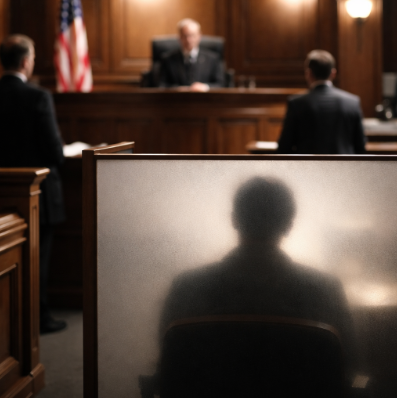
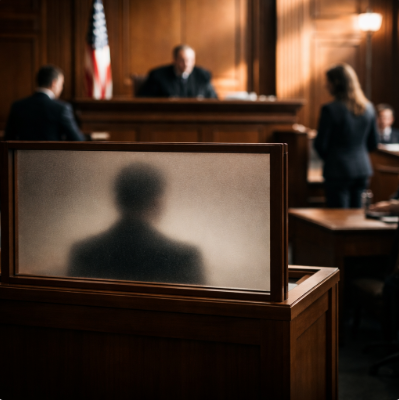
That afternoon, the next witness was scheduled to testify from behind a privacy screen. The arrangement was procedural, designed to ensure comfort and neutrality. Nothing about it suggested drama.
The clerk administered the oath. The courtroom grew silent.
Then the witness began to speak.
“I never thought anyone would recognize me.”
The words floated across the room, quiet but steady. Yet something in the tone caused a subtle shift.
The judge looked up sharply.
It was not what the witness said. It was how it was said.
A familiarity rested in the cadence. A memory stirred unexpectedly.
The judge leaned forward slightly, his attention sharpening.
“Remove the screen,” he instructed.
A faint murmur passed through the gallery.
A Face From the Past
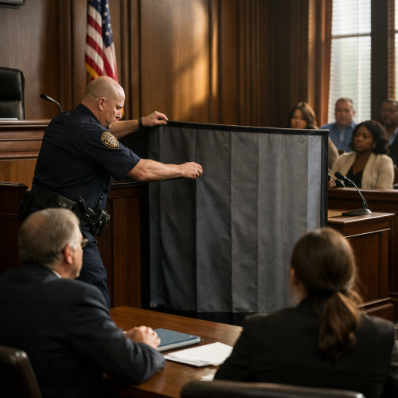
The privacy screen was lowered carefully. The witness remained seated, composed but visibly tense. As the barrier came down, the courtroom gained a clear view.
The judge studied the face before him.
For several seconds, he said nothing.
The attorneys exchanged puzzled glances. The jurors watched closely, sensing that something had changed.
Finally, the judge spoke, his voice controlled but firm.
“You testified in this courtroom five years ago.”
The witness inhaled sharply.
Silence followed.
The prosecution attorney looked confused. “Your Honor, are you suggesting prior involvement in a separate case?”
The judge nodded slowly. “I presided over a trial involving this individual.”
The courtroom absorbed the revelation. The witness shifted slightly in the chair, tension visible in posture and expression.
Courtrooms value consistency. Witness credibility depends not only on present testimony but on history. If a witness has previously appeared in another case, context matters.
The judge continued carefully.
“In that case, the testimony given was significant. The circumstances surrounding it were thoroughly documented.”
The witness lowered their gaze briefly before looking back up.
“I did not expect you to remember,” the witness admitted quietly.
“I remember important details,” the judge replied.

The Weight of Memory
The attorneys quickly reviewed their files, searching for records of prior involvement. The jurors remained attentive, aware that familiarity could influence proceedings.
The judge addressed the courtroom calmly.
“This court does not prejudge testimony. However, prior appearances must be acknowledged for the record.”
The prosecution attorney stepped forward. “Your Honor, we were unaware of this prior testimony.”
The defense attorney added, “We request clarification regarding the relevance.”
The judge nodded.
“Five years ago, this witness provided testimony in a matter involving similar circumstances. The outcome of that case depended heavily on credibility.”
The gallery grew quiet once again. Spectators leaned forward, understanding that something meaningful was unfolding.
The witness spoke carefully.
“My previous testimony was truthful. I am here today for the same reason.”
The judge regarded the statement thoughtfully. Experience had taught him that memory is a powerful tool. Patterns can reveal consistency or raise questions.
“Why were you not disclosed as a prior witness in this court?” the judge asked.
The prosecution responded quickly. “There was no indication in our preparation that the witness had appeared before this bench previously.”
The witness looked uneasy but remained composed.
“I did not believe it would matter,” the witness said.
In court, every detail matters.
When Recognition Changes the Room
The atmosphere shifted from routine to reflective. The jurors understood that recognition did not equal bias, but it demanded transparency.
The judge leaned back slightly, considering the implications.
“A witness who has previously testified under oath in this courtroom carries a documented history,” he explained. “That history can either strengthen credibility or invite scrutiny. It must be addressed openly.”
The attorneys conferred quietly. Records were requested. Court staff began verifying archived transcripts.
The witness waited in silence.
After a brief review, the judge spoke again.
“The prior testimony was determined credible at the time. There were no findings of inconsistency or misconduct.”
The tension eased slightly.
However, the moment remained significant.
Related Stories:
Recognition had introduced a new layer of depth to the current proceedings. The jurors would need to consider not only the present testimony but the established record.
The judge addressed the jury directly.
“You are to weigh this testimony based solely on the evidence presented in this trial. Prior appearances do not determine truth. They provide context.”
The jurors nodded.
The witness continued speaking, voice steadier now.
“I am here because I believe clarity matters.”
The statement resonated differently after recognition. It carried history.
Integrity Above All
The courtroom resumed its rhythm, but something had shifted beneath the surface. The brief pause had reinforced an important principle.
Justice depends on transparency.
The judge’s recognition did not derail the case. It strengthened it. By acknowledging the past openly, he ensured that no hidden detail could later cast doubt on the process.
After the witness concluded, the judge summarized calmly.
“This court values accuracy and openness. When prior connections exist, they must be disclosed. The integrity of these proceedings depends on trust.”
The jurors listened carefully. The attorneys appeared more focused. The spectators sensed that they had witnessed something rare.
Not drama.
Accountability.
Recognition had not altered the evidence. It had clarified it.
Why This Moment Matters
Courtrooms are places of procedure, but they are also places of memory. Judges carry experience from case to case. Patterns are remembered. Voices are familiar.
That afternoon demonstrated the importance of attentiveness. A single voice had triggered recollection. That recollection prompted transparency.
And transparency protects fairness.
The system did not rush forward.
It paused.
It verified.
It resumed with clarity.
In the end, the most powerful moment was not the lowering of the screen.
It was the judge’s decision to acknowledge what he recognized.
Because justice is not only about hearing testimony.
It is about remembering responsibility.
When integrity guides recognition, trust in the process grows stronger.
The courtroom returned to its steady rhythm, but those present understood something valuable.
Every detail matters.
Every voice carries history.
And every moment of transparency strengthens the foundation of fairness.
I remember everything