
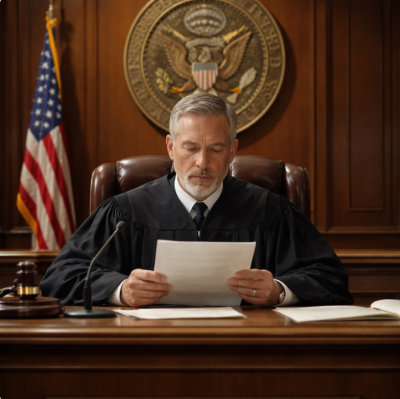
Before the Verdict Was Spoken
The courtroom felt settled in the way only a long trial can feel near its end. Weeks of testimony had shaped the room into a space heavy with detail. Evidence had been introduced carefully. Witnesses had answered questions under oath. Attorneys had presented arguments with precision and confidence.
Now only the verdict remained.
The jurors sat quietly inside the wooden box, their faces composed and unreadable. Spectators filled the gallery behind the railing, leaning forward slightly as if proximity might help them understand what would happen next. At the defense table, the attorney shuffled a final set of notes, though there was little left to say.
Beside him, the defendant sat unusually calm.
He did not appear anxious. His breathing was steady. His posture was relaxed. For someone awaiting a decision that could change his life, his composure felt almost unnatural.
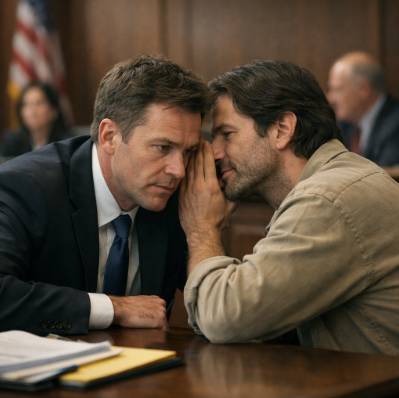
He leaned slightly toward his attorney and spoke softly.
“They’re going to say guilty.”
The lawyer turned, surprised by the certainty in his voice.
“What makes you say that?” he whispered.
The defendant’s eyes remained fixed on the judge.
“Because that’s what it was supposed to be.”
The attorney frowned. The statement felt incomplete, as though something more rested beneath it.
At the front of the courtroom, the judge prepared to read.
The Word Everyone Waited For
“Has the jury reached a unanimous decision?” the judge asked.
The foreperson stood.
“Yes, Your Honor.”
The silence that followed felt like a held breath shared by everyone in the room.
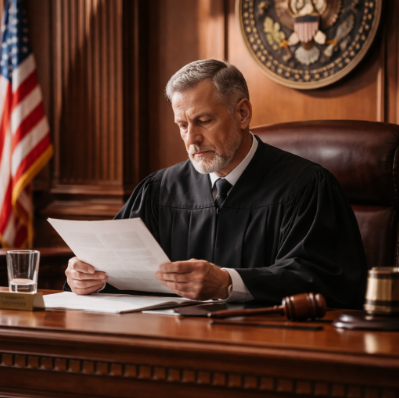
The judge unfolded the paper containing the verdict. The sound of it moving echoed more loudly than usual.
“The jury finds the defendant…”
The defendant closed his eyes.
Not in fear. Not in anticipation.
In expectation.
“…not guilty.”
The word landed with immediate impact. Gasps moved through the gallery. The defense attorney exhaled sharply, a mix of relief and disbelief crossing his face. The prosecution team exchanged stunned looks.
The defendant opened his eyes slowly.
There was no visible relief. No visible gratitude.
Instead, a faint expression crossed his face. Not triumph, not shock.
Recognition.
He leaned again toward his lawyer and spoke quietly.
“I told you. They changed it.”
The attorney stiffened.
“Changed what?”
But before the conversation could continue, the judge looked up from the bench, his attention drawn toward the defense table.
“What was that?” he asked evenly.
The room grew silent again.
When Certainty Begins to Shift
The defendant rose slowly.
His attorney placed a cautious hand on his arm, unsure whether to stop him.
“Your Honor,” the defendant said respectfully, “I believe the jury’s decision was not the original conclusion.”
The courtroom absorbed the statement with confusion.
The judge remained composed. “Please clarify.”
The defendant’s tone remained calm.
“I was informed that the verdict would be different. That certain factors would influence the outcome. When the word was spoken just now, it did not match what I had been led to expect.”
The gallery stirred softly. The prosecution team appeared unsettled. The jurors glanced at one another, uncertain.
The judge leaned forward slightly.
“You are suggesting interference?”
“I am suggesting,” the defendant replied carefully, “that there may have been external expectations placed on this outcome.”
The attorney beside him whispered urgently, urging caution. Yet the defendant remained steady.
The judge turned to the jury.
“Foreperson, has any outside influence affected your deliberations?”
The foreperson’s expression tightened. “No, Your Honor. Our decision reflects only the evidence presented in court.”
The judge paused, weighing the gravity of the situation. The integrity of the courtroom depended not only on fairness, but on the perception of fairness.
Accusations, even subtle ones, could not be ignored.

The Importance of Trust
The judge addressed the courtroom with deliberate calm.
“This court operates on the principle that verdicts are determined solely by the jurors’ review of verified evidence. Any suggestion of outside influence must be examined carefully.”
The defendant nodded slightly.
“I am not disputing the outcome, Your Honor. I am questioning the process that led me to expect something else.”
That distinction carried meaning.
Spectators in the gallery watched in silence, aware that the trial had not ended in the way anyone anticipated. Instead of celebration or closure, there was uncertainty.
The judge instructed the bailiff to maintain order while he addressed both legal teams.
Related Stories
“If there is any reason to believe improper communication occurred during this trial, it must be disclosed immediately.”
Both attorneys responded that they were unaware of any such interference. The jurors confirmed that their deliberations had been conducted according to procedure.
Yet the question lingered in the air.
How had the defendant predicted a different verdict with such certainty?
The judge recognized the delicate balance before him. While the official decision had been read, confidence in the process mattered just as much as the result.
He made a measured decision.
“This court will conduct a brief review to ensure that no external communication influenced this outcome. Until that review is complete, the record will reflect today’s proceedings as provisional.”
Gasps were softer now, replaced by thoughtful silence.
When Outcomes Are Not the Only Concern
As the courtroom slowly emptied, conversations remained hushed but intense. The defendant sat quietly once more, no longer speaking. His attorney appeared both relieved and unsettled.
The jurors exited with professional composure, confident in their deliberation yet aware of the unexpected complication.
At the bench, the judge reflected on the moment.
Justice is not only about verdicts. It is about trust in the path that leads to them.
Even a favorable outcome cannot erase doubt if the process appears compromised. By pausing to review, the court protected not only the defendant’s rights, but the integrity of the entire system.
The defendant’s earlier certainty now seemed less like confidence and more like a question mark hanging over the proceedings.
Whether his expectation stemmed from misunderstanding or misinformation, it had prompted something essential.
Examination.
And examination strengthens fairness.
Why This Moment Matters
The courtroom incident demonstrated something valuable about the justice system.
It showed that:
• Transparency matters as much as outcomes
• Confidence in procedure protects credibility
• Judges must remain vigilant even after a verdict
• Jurors serve as guardians of impartial decision making
• Questioning irregularities strengthens integrity
• Fairness includes reviewing unexpected developments
The verdict may have been not guilty.
But the larger lesson was about accountability.
In that room, the most important decision was not the word spoken.
It was the willingness to ensure that the word had been reached honestly.
Because justice does not end when a verdict is read.
It endures through the courage to verify that it was right.
[…] Big Conspiracy In This Courtroom […]