
The Moment the Judge Stood
The courtroom had reached that quiet edge where everything feels settled. Weeks of testimony had led to this final morning. The jurors sat upright, focused and prepared. Attorneys organized their notes with quiet confidence. Spectators filled the gallery, sensing that they were about to witness the final decision in a case that had drawn public attention for months.
At the front of the room, the judge maintained his steady composure. Years of experience had shaped his calm presence. His voice, when he began to speak, carried the familiar weight of authority that signaled the end of uncertainty.
“The court finds the defendant…”
Then he stopped.
The pause was not casual. It was complete. The kind of silence that causes every person in a room to notice.
No one moved. Even the faint rustle of papers ceased.
The judge’s eyes shifted, slowly lifting from the document before him and moving toward the back of the courtroom.
Something had changed.
A Movement in the Gallery
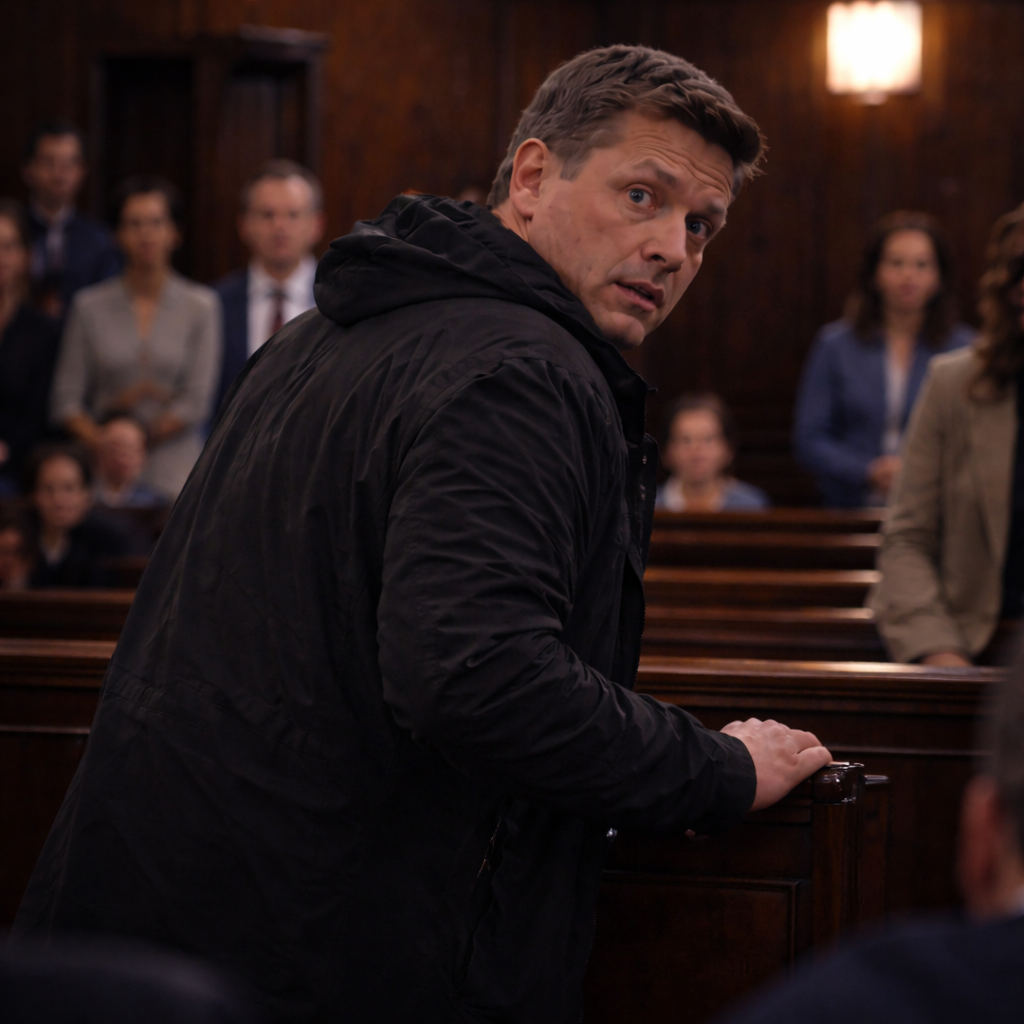
From the rear row of the gallery, a man rose quietly from his seat. He did not appear hurried, yet there was purpose in his movement. His eyes remained down as he stepped toward the aisle, as though hoping to leave unnoticed.
But in a courtroom, especially during the reading of a verdict, nothing goes unnoticed.
A soft murmur spread among the spectators. One juror glanced backward. The defense attorney frowned slightly, unsure what was happening.
The judge remained still for a brief moment, studying the man’s movement with careful attention. It was not panic that crossed his face. It was recognition.
Then something unusual occurred.
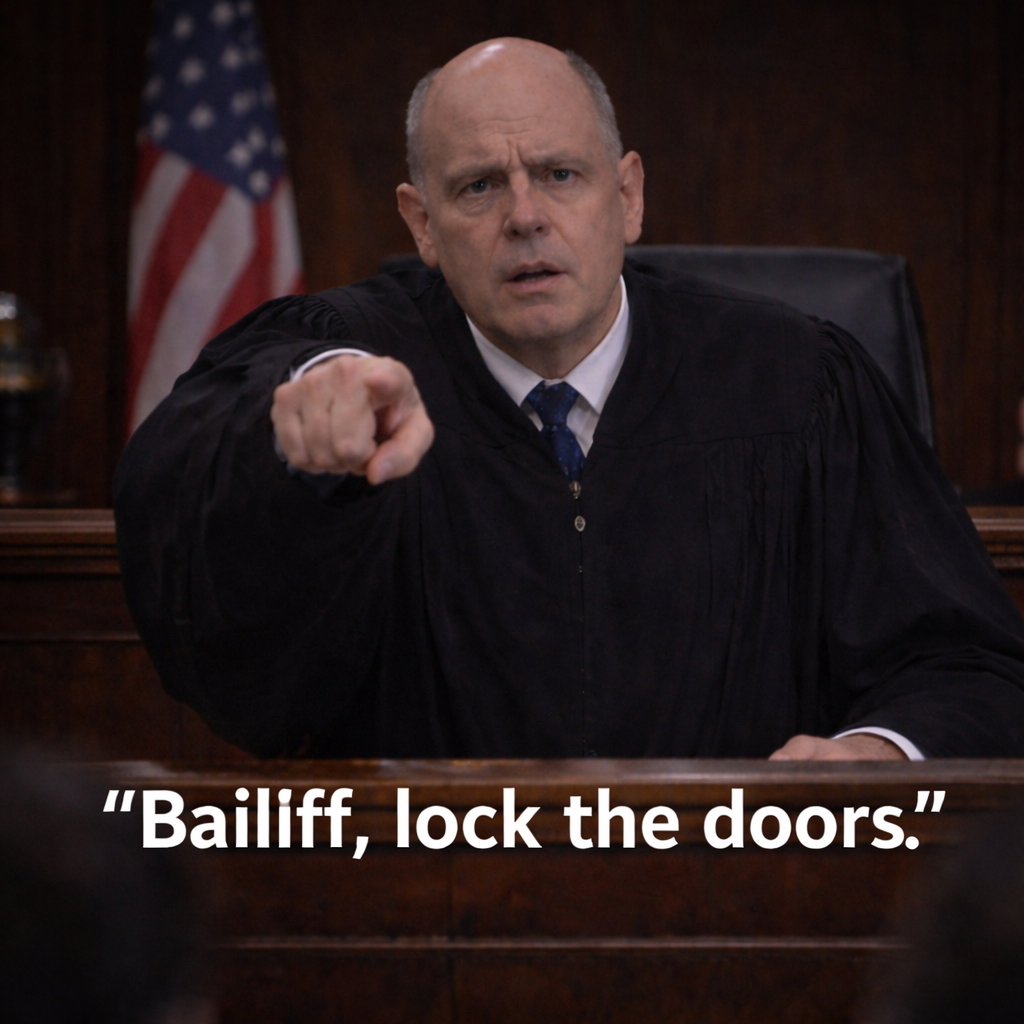
The judge stood.
Judges rarely stand during a verdict. Their position behind the bench symbolizes steadiness and authority. Standing signals urgency.
“Bailiff,” he said calmly but firmly, “lock the doors.”
The sound of the words seemed louder than they were. The bailiff moved immediately. Heavy courtroom doors closed with a solid echo.
The man in the gallery froze.
Every eye in the room turned toward him.
When Attention Shifts
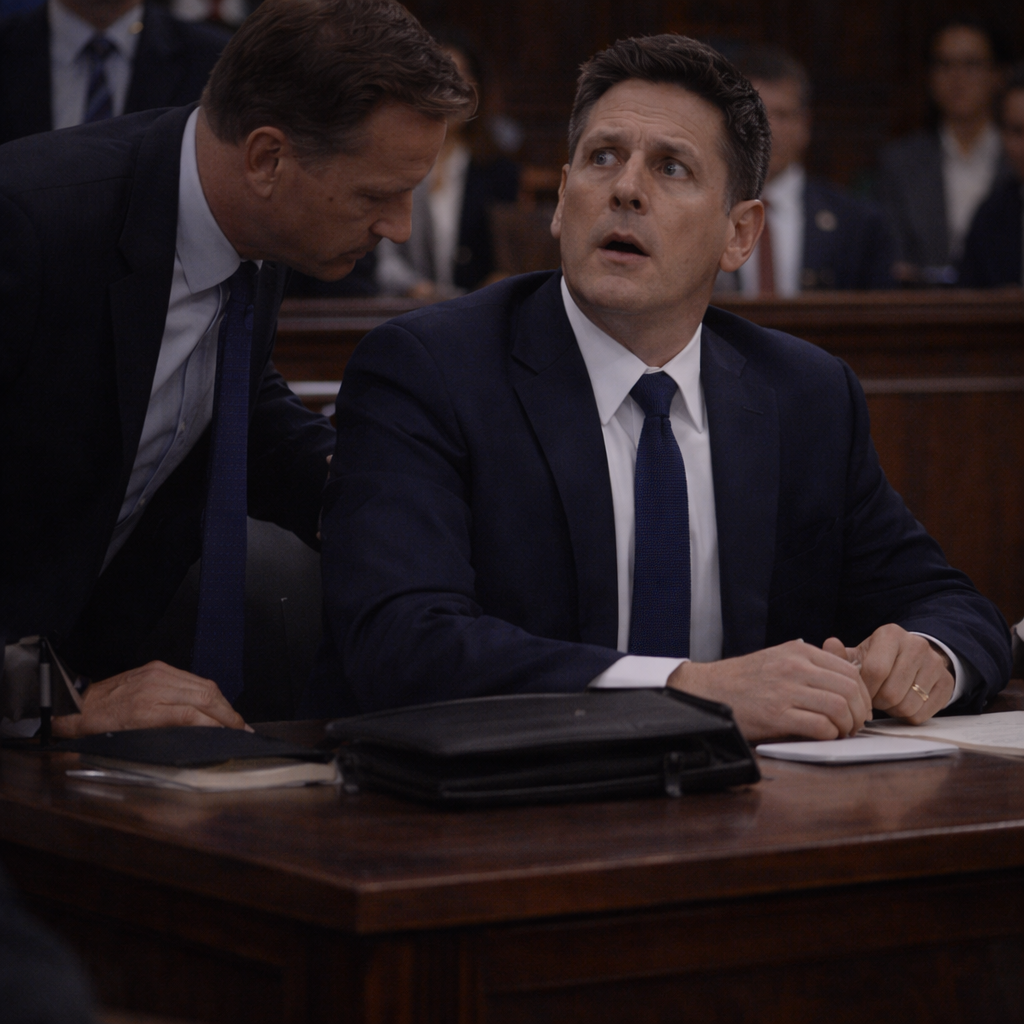
The courtroom felt smaller now, charged with a new tension. The defendant remained seated at the defense table, confusion replacing anticipation. His attorney whispered something urgently, though neither fully understood what had shifted.
The judge stepped slightly forward, hands resting firmly on the bench.
“We have been reviewing additional information,” he said, voice controlled and precise.
The man near the back shifted uneasily, his earlier calm replaced by visible discomfort.
The jurors watched closely. Their task had seemed clear only moments before. Now uncertainty entered the room.
Trials follow structure. Evidence is presented. Arguments are made. A verdict is delivered. That structure provides confidence.
But occasionally, something interrupts that structure. A detail overlooked. A connection discovered too late. A piece of information that refuses to stay hidden.
The judge’s gaze did not waver.
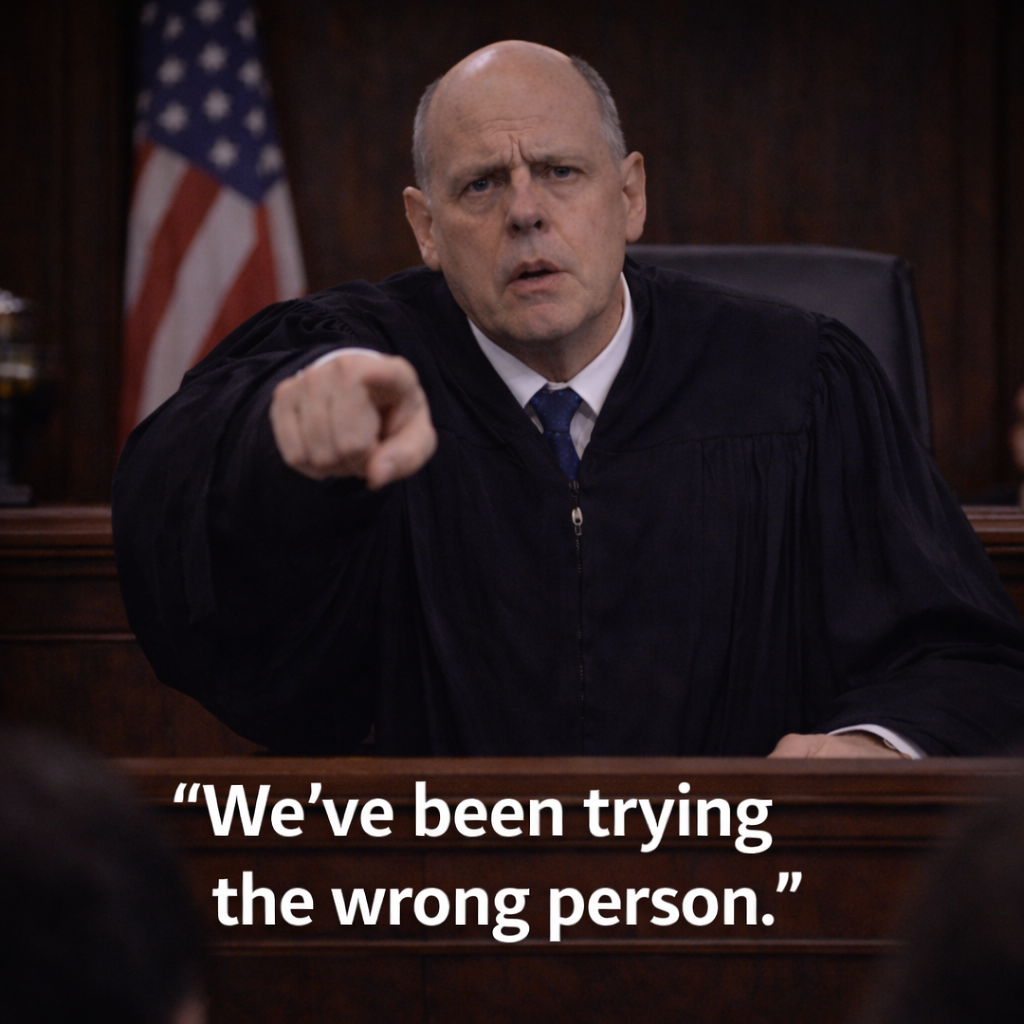
“It appears,” he continued, “that we may have been examining the wrong individual.”
A wave of shock moved quietly through the spectators. The defendant’s eyes widened. The prosecution team exchanged stunned looks.
The man near the back attempted another step toward the aisle.
“Remain where you are,” the judge instructed.
The bailiff approached calmly, ensuring that the man stayed in place without creating panic.
The Weight of Realization
The silence in the courtroom now felt heavier than before. What had seemed like the end of a story had become the beginning of another.
The judge spoke carefully, choosing each word with precision.
“Recent information indicates a connection between this individual and key evidence presented earlier in the trial.”
He did not raise his voice. He did not accuse recklessly. Instead, he acknowledged the importance of caution.
Justice is not about speed. It is about accuracy.
The jurors exchanged thoughtful glances. They understood that their role was to evaluate truth, not to rush toward finality.
The defendant, who had moments ago awaited judgment, now sat in stunned quiet. The direction of the case had shifted entirely.
In the gallery, spectators leaned forward, absorbing the unexpected development.
The man near the back attempted to maintain composure, but subtle signs of nervousness betrayed him. A tightening of his jaw. A hesitation in his breathing.
The judge addressed the room.
“This court will suspend the verdict temporarily while this matter is investigated further.”
Gasps were soft but present. The unexpected nature of the announcement carried weight.
Yet beneath the surprise was something deeper: reassurance.
Because the system had worked.
A detail had surfaced. A question had been asked. And instead of ignoring it for the sake of convenience, the court had chosen to pause.
The Importance of Pausing
In that moment, the courtroom became more than a place of decision. It became a place of responsibility.
The judge’s decision to stand, to stop, to question, reflected something essential about fairness. Justice is not served by moving forward when uncertainty remains.
The bailiff remained near the man in the gallery, ensuring calm order. The prosecution team began reviewing notes quickly, recognizing the need for clarity. The defense attorney sat in thoughtful silence, aware that what seemed like an ending had transformed entirely.
No dramatic accusations were made. No rushed conclusions followed. Instead, there was discipline.
And discipline protects fairness.
The spectators slowly realized they were witnessing something rare. Not chaos. Not confusion.
Accountability.
The judge returned to his seat but did not resume the verdict. Instead, he looked across the courtroom with steady resolve.
“We will reconvene after a thorough review of all related information.”
The room remained silent, yet the tension had changed. It was no longer the tension of impending judgment. It was the tension of unfolding truth.
A New Beginning
As the session concluded, people filed out more slowly than usual. Conversations were hushed but intense. What had seemed certain only minutes earlier was now open to reconsideration.
The defendant remained seated briefly, processing the shift. The man from the gallery was escorted calmly for further questioning.
And the judge, alone at the bench for a moment, reflected quietly.
Moments like this define the integrity of a system. Not the speed of a verdict. Not the drama of a declaration.
But the courage to stop when something feels incomplete.
Because sometimes the most powerful action is not delivering a conclusion.
It is recognizing that truth deserves another look.
Key Takeaways
• Justice requires patience and careful review
• Small details can redirect major decisions
• Authority carries responsibility to question and verify
• True fairness values accuracy over speed
• Unexpected moments can strengthen integrity
Niece story to reflect on especially regarding conclusion that are made in a rushy manner