
Courtrooms need records. They do not rely on memory. They do not rely on interpretation. They do not rely on tone. They need records.
If something is in the transcript it is treated as fact. Words spoken under oath are written down printed and stored away. They become permanent.. Being permanent is important.
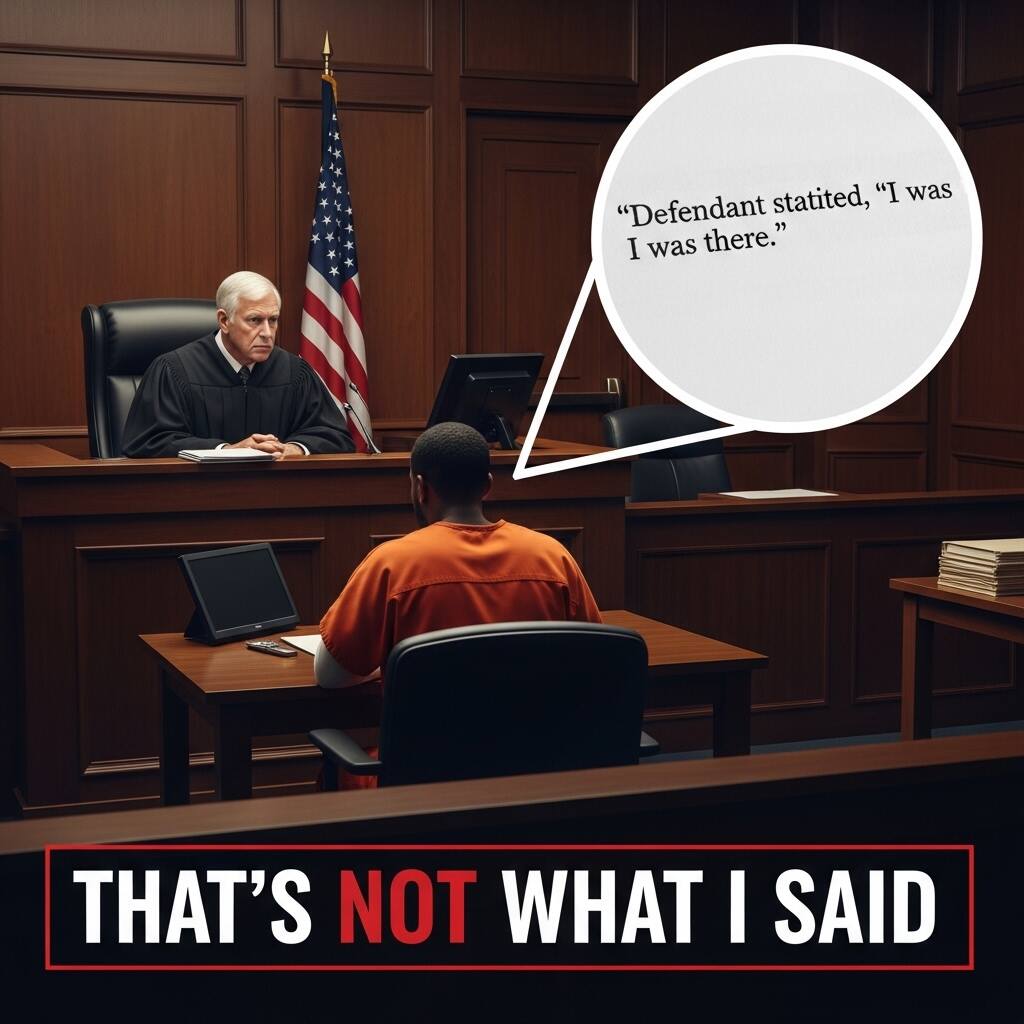
That afternoon something big changed. The defendant was sitting at the defense table wearing a jumpsuit. He was sitting up straight with his hands calmly in front of him. He had testified the day answering each question carefully and without showing any emotion.
Now the prosecution wanted to talk about one line from that testimony.
The judge said, “Clerk please read the part of yesterdays transcript that the lawyer asked for.”
The courtroom became quiet.
The clerk found the page and read it clearly.
“Defendant said, ‘I was there.'”
The jury started to murmur.
It was a sentence.
It was direct.
It was damaging.
“I was there.”
The prosecution had built its case around the idea that the defendant was at the location. Being at the location meant he had the chance to do something. Having the chance to do something meant it was possible.
The defendant slowly looked up.
He did not look scared.
He did not look surprised.
He looked focused.
“That is not what I said ” he said quietly.
The prosecutor became stiff.
The jurors stopped writing.
The judge leaned forward a little.
“What did you say?” the judge asked.
The defendant kept his voice under control.
“I said, ‘I was near there ‘” he said. “Not ‘I was there.'”
The difference sounded small.
In a courtroom small differences can change everything.
Being near a place is not the same as being inside.
Being near a place is not the same as being present.
Being near a place is not the same as taking part.
The prosecutor stood up.
“Your Honor the transcript is official ” he said.
The judge nodded slowly.
“Yes it is ” he said.
Then he looked at the clerk.
“Play the audio ” he said.
The room became quiet.
The Authority of Paper is important.
Transcripts are trusted.
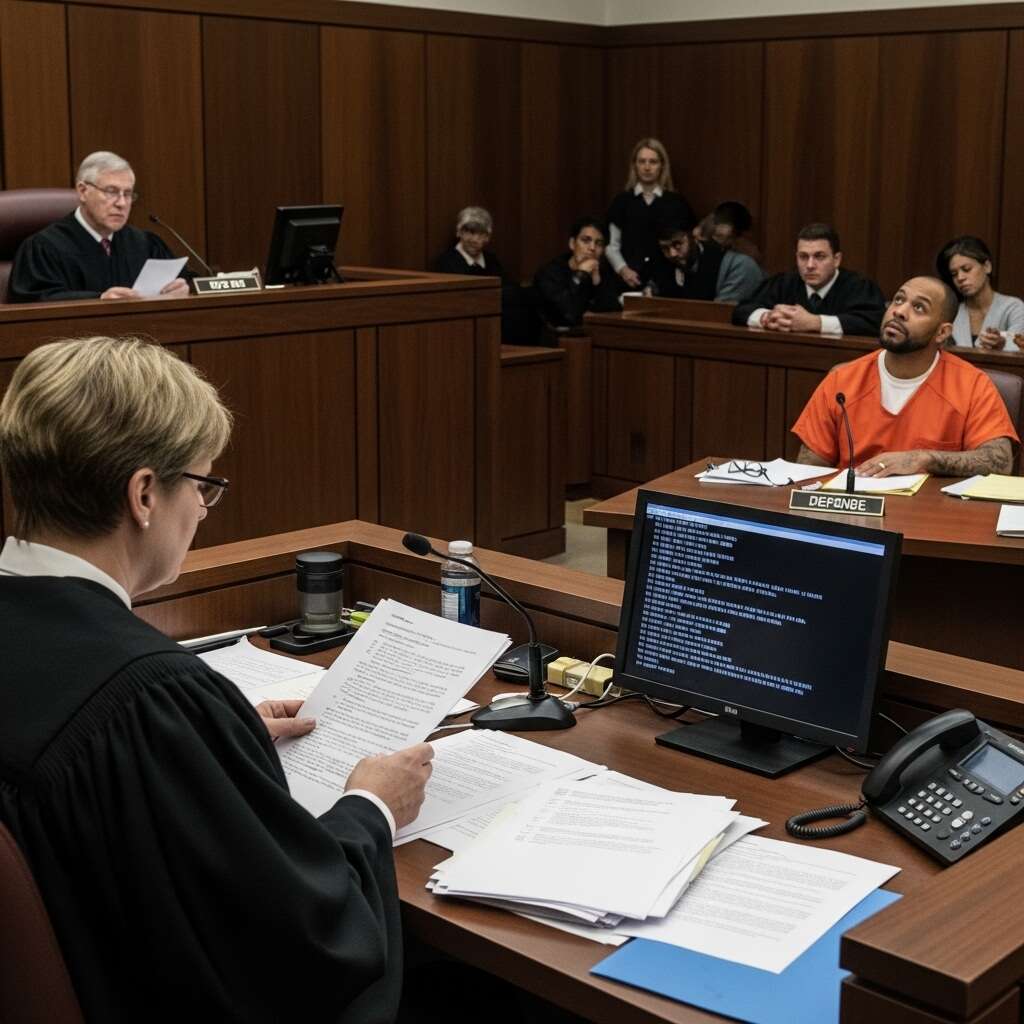
Court reporters write down what people say in time and they are very accurate.
That text becomes the basis for appeals, rulings and judgments.
It is rare to challenge a transcript.
It is even rarer to say that it misquoted a defendant during a trial.
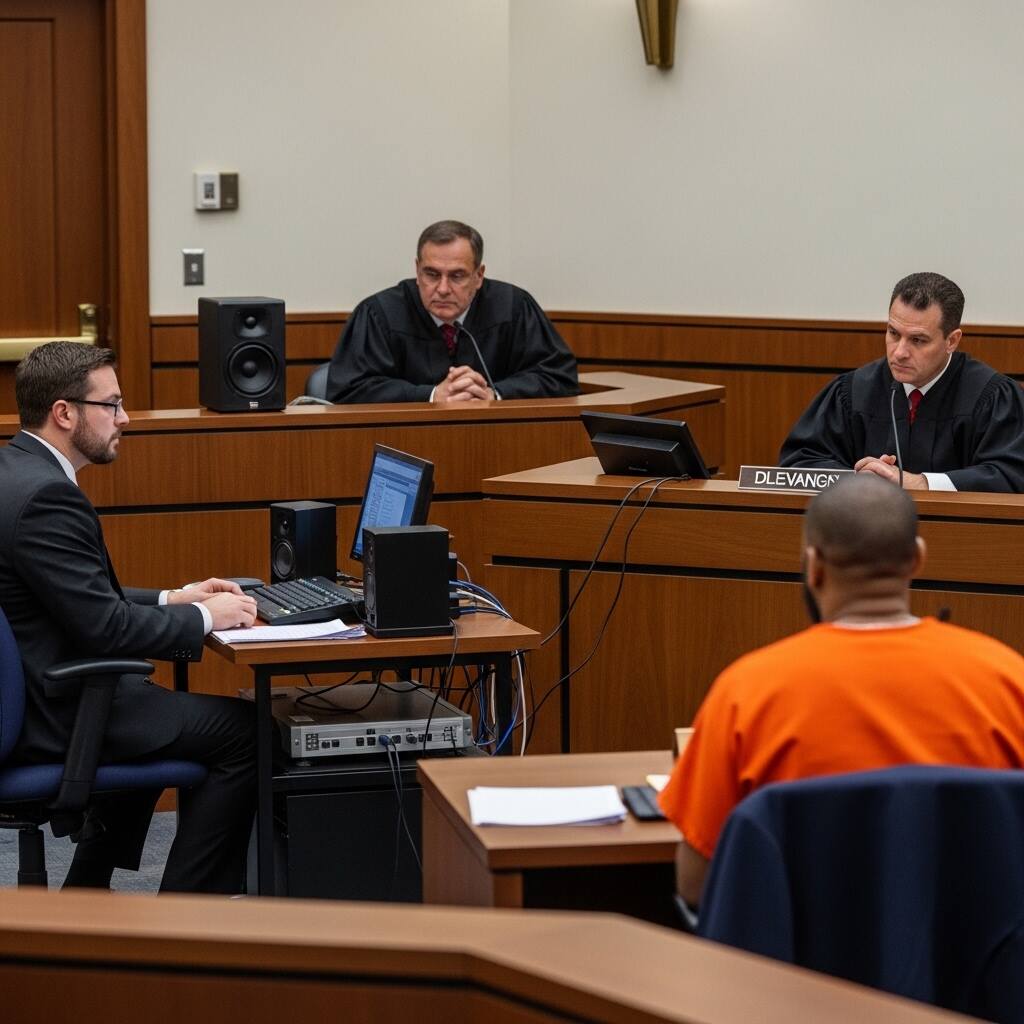
The courtroom technician found the audio file from the day
The faint sound of papers shuffling filled the room.
The judge motioned for silence.
The recording started.
The prosecutors voice came from the speakers.
“Were you at the storage warehouse that night?”
There was a pause.
Then the defendants recorded voice said, “I was near there.”
The difference was clear.
Near not
The jury reacted visibly now.
The clerk looked down slightly.
The prosecutor remained standing with his jaw tight.
The judge raised his hand to stop the playback.
“Clerk review the entry ” he said.
The clerk scanned her transcript quickly.
Her brow furrowed.
“Your Honor it seems the phrase was written down as ‘I was there.'”
“Is there any distortion?” the judge asked.
The technician shook his head.
“No ” he said.
The room took that in slowly.
Because if the transcript changed “near” to “there ” the meaning changed a lot.
Meaning is everything.
The prosecution approached carefully.
“Your Honor whether ‘near’ or ‘there’ the defendant put himself near the location ” he said.
The defense attorney stood up immediately.
“Being near a location is not the same as being present ” he said.
The judge nodded slightly.
“That difference is important ” he said.
Because being near a location does not mean you entered.
Being near does not mean you took part.
Being near could mean you were across the street.
In the parking lot.
On the sidewalk.
Language is important in courtrooms.
This case had depended on language.
The prosecutor tried to regain control.
“Your Honor the defendant admitted being near the scene at the time ” he said.
The defense responded calmly.
“He admitted being near a road ” he said. “That is not the same as being inside the building.”
The jurors listened carefully.
They had read the printed transcript that morning.
Some had underlined the sentence.
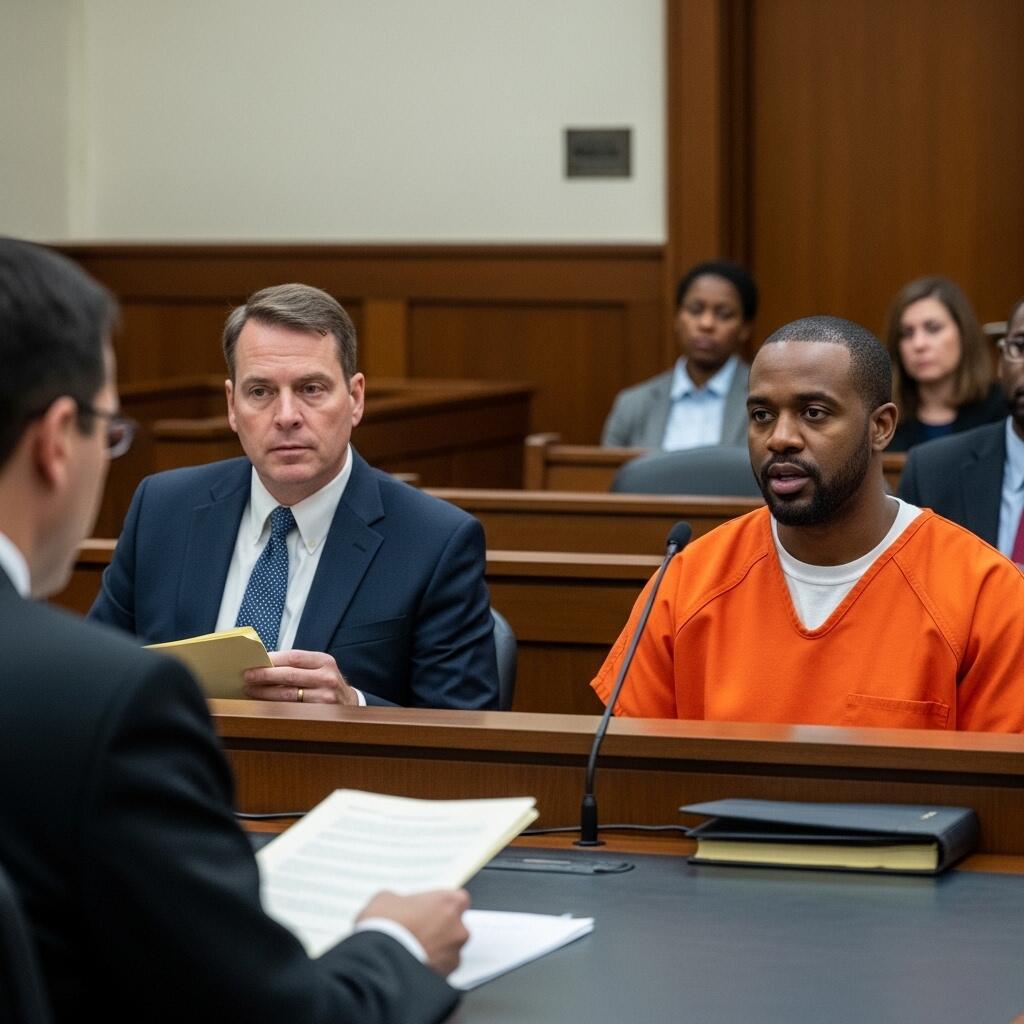
“I was there.”
That phrasing had seemed decisive.
Now the audio told a story.
The judge leaned back slowly.
“Clerk correct the transcript to reflect the audio ” he said.
“Yes Your Honor ” the clerk replied.
The correction seemed minor.
Its impact was not.
Because the closing arguments had already talked about the phrase.
The prosecutions story had assumed the defendant was inside the warehouse.
Now that assumption was weaker.
The defense attorney spoke again.
“Your Honor we ask to remove any argument that relies on the phrasing ” he said.
The prosecutor objected.
“The meaning is still the same ” he said.
The judge looked directly at him.
“Similar is not the same ” he said.
The room felt heavier.
Because in cases small differences can determine the outcome.
The court reporter, who was sitting quietly at the side looked visibly upset.
She had written down thousands of hours of testimony in her career.
Mistakes were rare.
The judge addressed her gently.
“Was there any uncertainty during the testimony?” he asked.
“No, Your Honor ” she replied softly. “The audio is clear.”
The implication hung silently.
Mistakes can happen.
In court mistakes can change the consequences.
The defendant remained calm.
He had not raised his voice.
He had not accused anyone.
He had simply corrected the record.
“That’s not what I said.”
Four words.
Enough to pause a trial.
The jurors rely on transcripts to review testimony.
Some had taken notes that said “I was there.”
Now they. Rewrote.
The psychological change was subtle but significant.
If the transcript could misstate one sentence could it misstate others?
Trust in record-keeping is the basis of the system.
Doubt in the record introduces instability.
The judge instructed the jury carefully.
“You are to rely on the corrected transcript and the audio evidence ” he said.
The prosecution resumed questioning. The tone had changed.
Confidence was replaced with caution.
Because the defendants credibility had strengthened.
He noticed the discrepancy.
He challenged it calmly.
He was right.
The defense attorney approached the bench more.
“Your Honor we ask to review all parts of yesterdays testimony for accuracy ” he said.
The prosecutor objected.
The judge considered.
“Granted ” he said.
The clerk and technician began -referencing audio and transcript entries.
The process was slow.
Meticulous.
Because once an error is found it invites scrutiny.
The courtroom waited.
Natural sounds filled the silence. Shifting chairs, coughs, the faint hum of electronics.
No music.
No drama.
Just the weight of verification.
After minutes the clerk spoke.
“Two minor punctuation corrections ” she said. “No additional substantive discrepancies found.”
The judge nodded.
“Let the record reflect correction ” he said.
The atmosphere had changed permanently.
The prosecutions case had leaned heavily on language.
“I was there.”
That sentence suggested presence inside.
It implied entry.
It hinted at opportunity.
Now the corrected phrase. “I was near there”. Left space.
Space for doubt.
Space for interpretation.
The defendant looked toward the jury briefly.
Not pleading.
Not dramatic.
Just steady.
Because sometimes the strongest defense is precision.
Not denial.
Not anger.
Precision.
The judge announced a recess.
The jurors filed out quietly.
The prosecutor gathered his notes slowly than before.
The defense attorney leaned toward the defendant.
“Good catch ” he whispered.
The defendant nodded slightly.
He had listened carefully to the clerks reading.
He had trusted his memory.
He had spoken up.
That single correction changed the direction of the trial.
Because in a courtroom words are not suggestions.
They are evidence.
Evidence must be exact.
The morning the defense asked to play back a second exchange from the same testimony.
Another phrase surfaced.
In the transcript it read: “I knew what was happening.”
On audio the defendants voice clearly said: “I didn’t know what was happening.”
The courtroom became quiet again.
The prosecutor objected sharply this time.
The judge overruled.
The jurors leaned forward.
Two words missing.
Two words that reversed meaning entirely.
The court reporters hands trembled slightly as she corrected the record.
The defendant didn’t move.
Because now the issue wasn’t a word.
It was a pattern.
If a pattern existed.
What else, in the record needed to be heard instead of read?
[…] That’s Not What I Said […]