
The Final Piece of Evidence
The courtroom carried a focused stillness that afternoon. Weeks of testimony had narrowed the case to a single unresolved question. Every witness had spoken. Every document had been examined. Jurors sat upright in their box, attentive and composed. Spectators in the gallery leaned forward with quiet anticipation.
At the prosecution table, confidence seemed to grow by the minute. The lead prosecutor stood tall, reviewing his final notes before addressing the court. Across the room, the defense attorney remained calm, hands folded neatly on the desk. The defendant watched silently, aware that the next few moments would shape everything.
The judge adjusted his glasses and looked toward the prosecution.
“Do you have anything further before we proceed?”
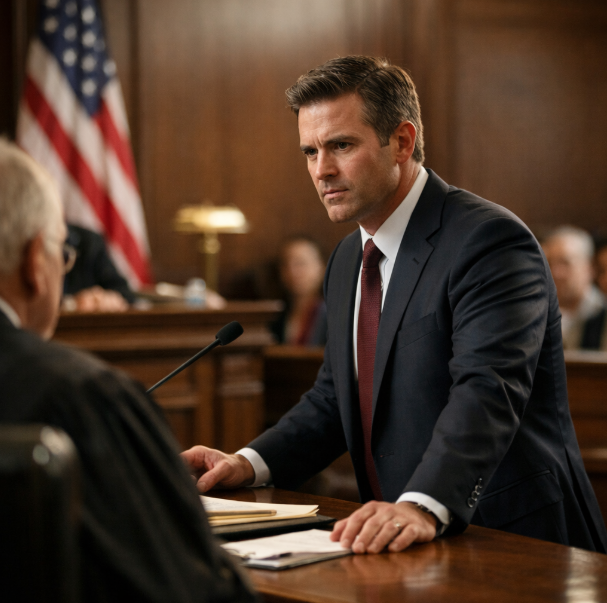
The prosecutor stepped forward.
“Your Honor, the final piece of evidence proves everything.”
His voice was steady, assured. The words carried weight. After weeks of complex argument, the phrase final piece sounded decisive.
The judge nodded. “Present it.”
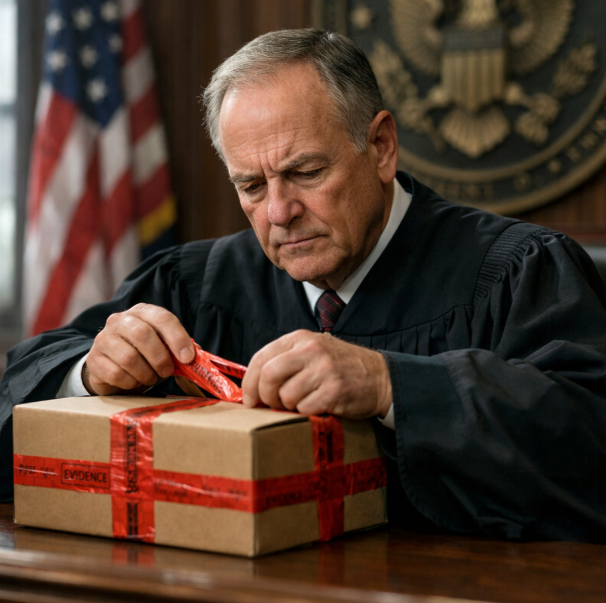
The bailiff approached with a sealed evidence box. It had been logged earlier that day, documented carefully as part of the official record. The label confirmed the time and chain of custody.
The courtroom fell silent.
An Unexpected Discovery
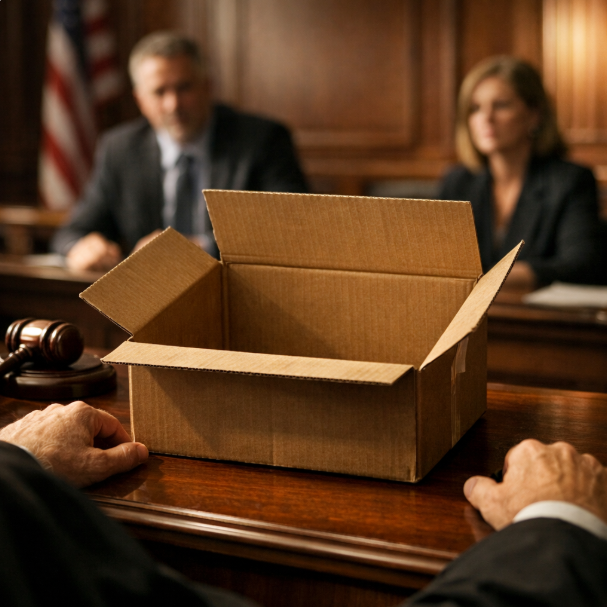
The judge opened the sealed box carefully. Every eye in the room followed the movement. Jurors leaned slightly forward. The prosecution team waited confidently.
Inside the box, there was nothing.
The space was empty.
A soft gasp spread through the gallery. One juror blinked in disbelief. The defense attorney raised his eyebrows slightly but said nothing.
The prosecutor froze.
The judge looked inside once more, as though verifying what he already saw. Then he placed the lid gently on the bench.
“This evidence was logged two hours ago,” the judge said evenly.
The statement hung in the air.
The prosecution stepped forward quickly. “There must be an error. The contents were secured.”
The judge’s expression remained calm but serious. “The record indicates that the box was sealed and delivered directly to the court.”
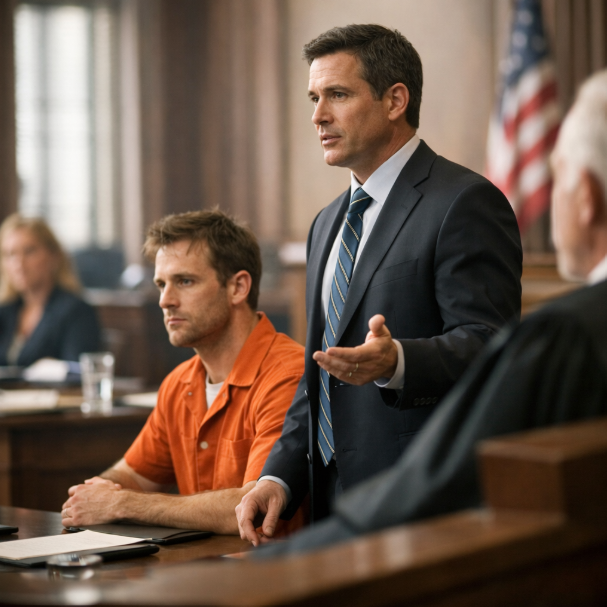
The defense attorney slowly stood.
“Your Honor,” he said respectfully, “may I address the matter?”
“You may.”
The defense attorney turned slightly toward the jury before speaking. “According to the log, the evidence was processed while the prosecution maintained custody.”
The prosecutor’s confidence began to fade. “That is standard procedure,” he responded. “The chain of custody was intact.”
The defense attorney replied carefully. “The record also shows that for a brief period, the evidence was handled privately.”
The courtroom absorbed the implication.
The Weight of Accountability
Trials rely on trust. Trust in documentation. Trust in procedure. Trust in the handling of materials that may influence a verdict.
The judge leaned forward slightly. “This court must understand how evidence logged as complete is now empty.”
The prosecutor cleared his throat. “It is possible that a clerical mistake occurred.”
The defense attorney responded calmly. “Clerical mistakes do not remove physical contents.”
A quiet murmur moved through the spectators. The jurors remained composed but alert.
The judge turned to the bailiff. “Confirm the log entries.”
The bailiff reviewed the digital record displayed on a nearby monitor. “The evidence was logged at 1:14 PM and marked sealed at 1:26 PM.”
“Who sealed it?” the judge asked.
The answer came after a brief pause.
“The prosecution office.”
Silence returned.
The prosecutor spoke carefully. “Your Honor, I assure the court there was no intentional mishandling.”
“No one has suggested intent,” the judge replied. “We are examining facts.”
The defense attorney addressed the jury once more. “If the final piece of evidence proves everything, as stated, its absence proves something equally important.”
The statement was not dramatic. It was precise.
When Confidence Shifts
The courtroom atmosphere changed from anticipation to scrutiny. What had been presented as a decisive moment now required explanation.
The defendant remained seated, calm but observant. His attorney continued methodically.
“Your Honor, before this case proceeds, we request a full review of the evidence handling process.”
The prosecutor nodded reluctantly. “We have nothing to hide.”
The judge considered the situation carefully. A trial cannot move forward under uncertainty regarding evidence integrity.
“This court will pause proceedings to conduct an immediate review of the chain of custody,” the judge announced.
The gavel sounded softly.
No verdict would be delivered that afternoon.
Jurors were escorted briefly from the room while court officials reviewed documentation. The prosecution team examined their own records. The defense remained composed.
Related Stories
Spectators whispered quietly, aware they were witnessing something significant. Not chaos. Not conflict.
Accountability.
When the jurors returned, the judge addressed them directly.
“You are to understand that the integrity of evidence is central to your decision. The court will ensure that all materials meet procedural standards before deliberation continues.”
The jurors nodded.
The prosecutor stood once more. His tone had shifted from confidence to caution. “Your Honor, we support a full review. Transparency benefits everyone.”
The defense attorney agreed. “Accuracy protects justice.”
Integrity Above Conclusion
As the session adjourned, the courtroom atmosphere reflected thoughtful seriousness. The empty box remained on the bench as a symbol of responsibility rather than accusation.
The judge remained seated briefly after others began to exit. Trials are not measured solely by outcomes but by the fairness of the path leading there.
In this case, the absence of evidence had become evidence itself.
It demonstrated the importance of careful procedure. It highlighted the need for accountability at every stage.
Most importantly, it reinforced a fundamental truth.
Justice depends not only on what is presented, but on how it is preserved.
The prosecutor’s earlier declaration that the final piece of evidence proves everything now carried a different meaning. It proved that systems must be examined when inconsistencies arise.
The defense attorney quietly reassured his client that patience was necessary. The jurors prepared to return once the review was complete.
The trial had not ended.
It had strengthened.
Why This Moment Matters
This courtroom event demonstrated several essential principles:
• Evidence integrity is central to fair decision making
• Chain of custody procedures protect credibility
• Courts must pause when inconsistencies arise
• Transparency strengthens public trust
• Accountability applies to all parties equally
• Fair trials require both proof and preservation
The empty evidence box did not deliver a verdict.
It delivered a reminder.
Accuracy is not optional. It is foundational.
In that courtroom, confidence shifted to scrutiny. Scrutiny led to accountability. Accountability protected fairness.
And fairness remains the true measure of justice.
[…] Empty Evidence Box […]
[…] The Empty Evidence Box […]